About Us
We are professional cooling tower fills manufacturer, which can supply wide ranges of cooling tower fills with PVC, PP or CPVC materials.

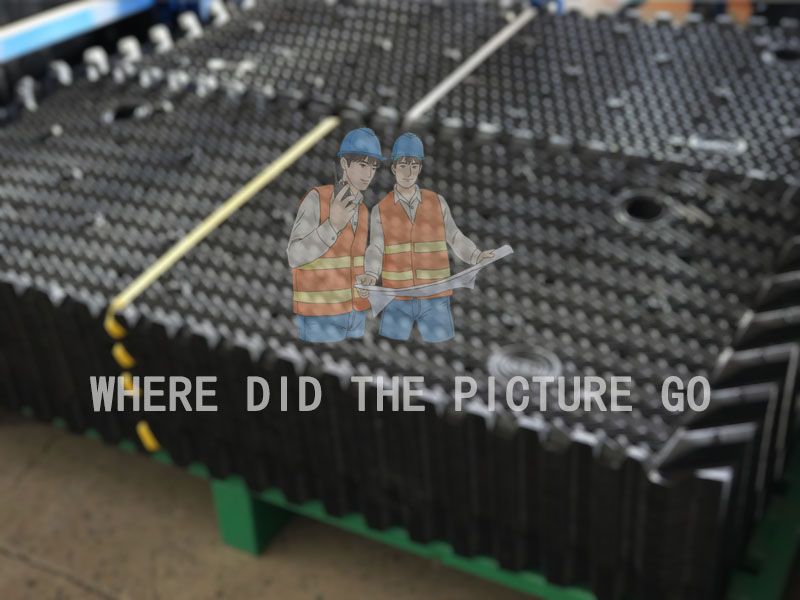
In many industrial facilities, cooling tower performance doesn’t suddenly collapse—it slowly drifts away from its original design value. Operators often notice higher outlet temperatures or rising energy consumption long before anyone opens the tower. In most cases, the real issue is the gradual loss of performance in the cooling tower fill.
From field experience, restoring efficiency usually starts with understanding how the cooling tower fill media has changed over time under real operating stress.
The cooling tower packing inside the system is constantly exposed to heat, water chemistry, and airborne contaminants. These factors slowly change how water spreads and how air flows through the structure.
When this happens, the tower fill no longer performs like it did at commissioning.
Algae and biofilm gradually cover the surface of cooling tower fill media, reducing effective heat transfer area.
Hard water deposits form layers that block water film development on cooling fill.
Long-term thermal stress weakens the structure of cooling tower packing filll, causing deformation.
Uneven clogging creates preferred flow paths, reducing contact efficiency.
High-pressure flushing can remove loose deposits and restore partial performance of cooling tower fills material.
Proper chemical treatment dissolves mineral buildup without damaging structural integrity.
Adjusting fan operation can improve distribution across the cooling tower packing.
In severely affected zones, replacing only damaged sections of cooling tower fill media can restore system balance without full shutdown.
If repeated cleaning no longer improves performance, the system has likely reached the end of its fill life cycle. At this point, sourcing from a reliable cooling tower fill replacement supplier becomes necessary.
Many operators in Southeast Asia and the Middle East now prefer china cooling tower filler solutions due to their balance of cost and industrial reliability. In large retrofit projects, china cooling tower infill products are also widely adopted for consistent performance.
PVC Cooling Tower Packing is commonly used in moderate environments where temperature and chemical stress are controlled.
PP Cooling Tower Fill Media is preferred in high temperature or chemically aggressive applications.
High biological growth reduced cooling efficiency significantly. Cleaning restored only partial performance, and eventual replacement of cooling fill was required.
Dust contamination caused rapid fouling. Switching to a more open structure cooling tower packing improved operational stability.
Seasonal load variation exposed weaknesses in aging cooling tower fills material. A material upgrade improved long-term consistency.
Recovering cooling performance is not always about replacing equipment. In many cases, the most effective solution begins with restoring the function of the cooling tower fill.
With the right combination of cleaning, optimization, and selective replacement, aging systems can often regain a significant portion of their original efficiency.
Only if fouling is not severe or structural damage has not occurred.
Gradual increase in outlet water temperature is usually the earliest indicator.
Yes, in systems with localized damage or uneven fouling.
When repeated cleaning no longer improves performance.
Yes, material determines resistance to fouling and thermal stress.
This article is based on practical engineering experience in industrial cooling system recovery and optimization, focusing on real-world performance restoration strategies.
Leave a comment
All fields marked with an asterisk (*) are required