About Us
We are professional cooling tower fills manufacturer, which can supply wide ranges of cooling tower fills with PVC, PP or CPVC materials.

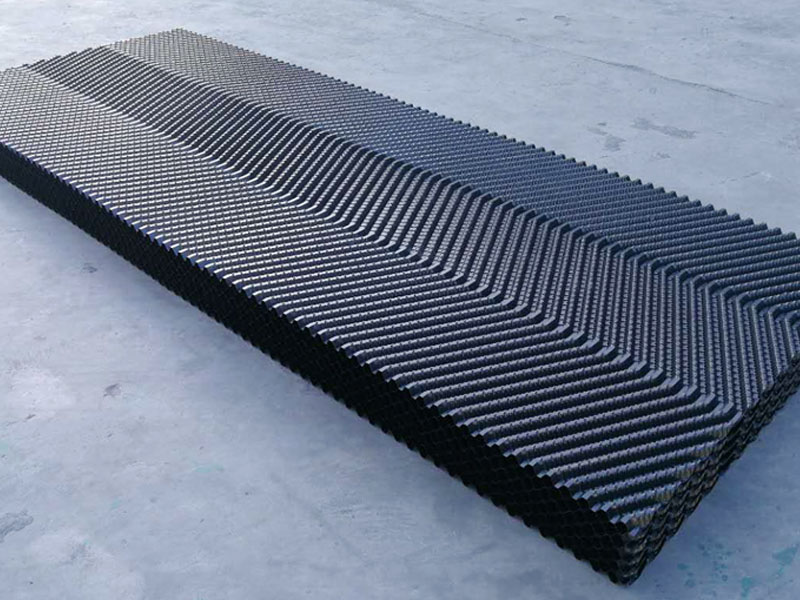
If you manage a cooling tower, you know the cooling tower fill is the workhorse inside. It’s not just filler material – it controls heat exchange, energy cost, and system uptime. A worn or wrong fill forces fans and pumps to work overtime, adding 15‑20** to electricity bills. I’ve helped plant owners save thousands by doing a simple cooling tower fill replacement with the right profile. This guide covers fill types by tower style, material selection, buying tips, and daily maintenance – all in plain workshop English.
Different tower designs need different fill geometry. Here’s what works for the three most common configurations.
Water falls vertically while air moves horizontally across the fill. Crossflow works well with splash fills or low‑density film fills. Because water doesn’t fight the airflow, you can use wider flute spacing. Many older crossflow towers run on PVC cooling tower filler with chevron patterns. Our PVC Cooling Tower Fill is a direct fit for crossflow retrofits – rigid, lightweight, and easy to install.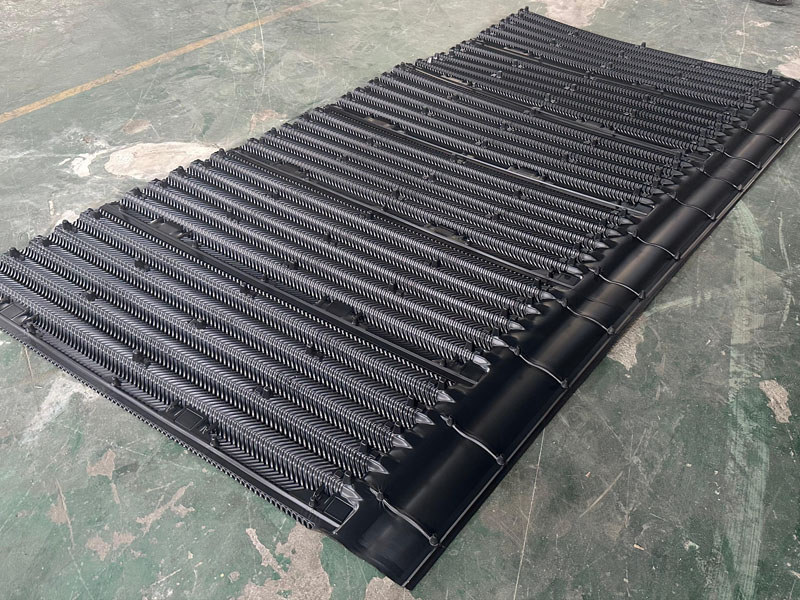
Air moves up while water falls down, creating intense turbulence. High‑efficiency film fills dominate here because they maximize surface contact. The trade‑off is higher pressure drop, so the fill must be precisely spaced. For most counterflow applications, PP Cooling Tower Fill handles water up to 90°C and aggressive chemicals. If your water is clean, a tight film pack will slash approach temperature.
Round (bottle‑shaped) towers need fill cut into wedge sectors to fit the curvature. Using standard rectangular blocks creates air bypass – sometimes losing 25** efficiency. That’s why we manufacture Round Cooling Tower Fill with waterjet cutting. A serious cooling tower filler factory will check your internal diameter before production.
Ordering cooling tower fills without preparation leads to misfits. Keep these points in mind, especially when sourcing from a fill replacement factory.
Choosing the right material for your tower fill directly impacts lifespan.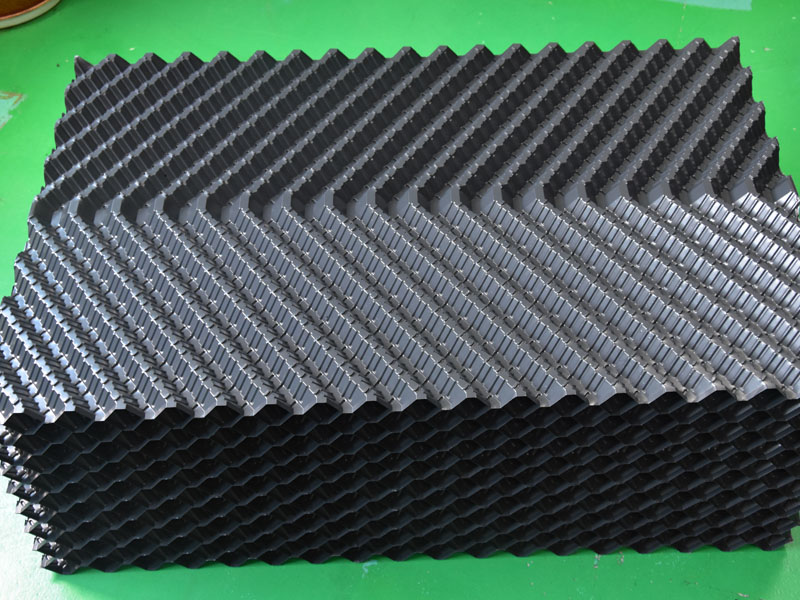
Besides cooling tower filler, we also manufacture air intake grilles (stop debris before it reaches the fill) and cooling tower water collectors to reduce drift loss. Matching grilles + fill + drift eliminators gives the best tower efficiency.
How the fill breaks water matters as much as the material.
Thin corrugated sheets where water spreads as a film. Maximum surface area – best for clean water loops (HVAC, closed‑loop industrial). Our standard film fills use sine‑wave or chevron patterns to boost turbulence without clogging.
Open bars or grids that break water into droplets by splashing. Perfect for dirty water (cooling ponds, rolling mills) because solids fall through. Lower thermal efficiency but almost maintenance‑free.
Wider flutes with textured surfaces that resist fouling while keeping decent efficiency. Great for river or reclaimed water. Our round tower fill often uses a hybrid structure to balance performance and clog resistance.
A quality cooling tower filler should drop water temperature by 5‑8°C per foot of fill under standard conditions. But efficiency isn’t just about degrees – it’s about pressure drop vs. fan energy. Cheap fills may have high heat transfer but foul within months. Look for a low pressure drop (under 0.8 inch water gauge per foot) and a proven KaV/L value. One client replaced old splash fill with our 26mm PVC film fill and got a 2.5°C cooler return water – their chiller energy dropped by 12**. The cooling tower fill replacement paid back in under 8 months.
We stock common block sizes: 500x500mm, 600x600mm, and 1220x2440mm sheets you can cut on site. But real value comes from custom fabrication. If your tower is from a discontinued brand, we can reverse‑engineer the tower fill from an old sample or a hand sketch. Round towers need sector packs; we use waterjet cutting for perfect edges. Even special holes for tie rods can be added. Our engineering team has digitized over 300 tower models. Send a photo with dimensions, and you’ll get a CAD proposal within two days – that’s the power of a direct cooling tower filler factory.
Even premium cooling tower fills last longer with simple care:
During a cooling tower fill replacement, also inspect the basin and drift eliminators. Our cooling tower water collector paired with a fresh fill cuts water loss by up to 30**.
Cooling tower fill may look simple, but it’s a precision component that drives operating cost. Whether you need standard PVC blocks for a small rooftop unit or custom round cooling tower fill for a 5000‑ton field‑erected tower, working with a specialized cooling tower filler factory gives you peace of mind. We’ve been manufacturing tower fill for over a decade, plus complementary parts like air intake grilles and water collectors. No guesswork – just a fill that fits perfectly and performs year after year.
Leave a comment
All fields marked with an asterisk (*) are required