About Us
We are professional cooling tower fills manufacturer, which can supply wide ranges of cooling tower fills with PVC, PP or CPVC materials.

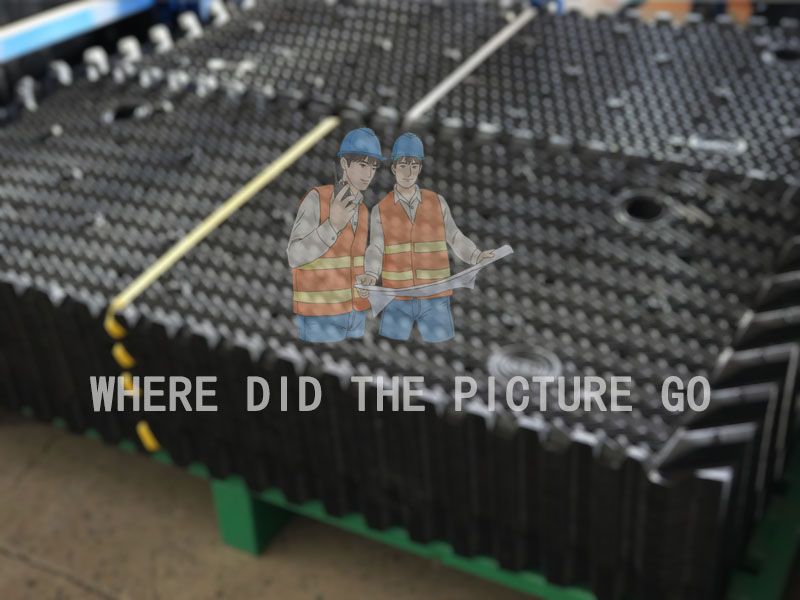
If you're searching for a reliable cooling tower fill that won't fail after two summers, you've probably seen both PVC and PP options. I've helped hundreds of customers decide between them, and the answer depends on your water temperature and chemical treatment. In this guide, I'll break down everything about cooling tower filler so you can make a smart choice for your next cooling tower fill replacement. We're a direct cooling tower filler factory, so I'll give you real talk — no marketing fluff.
Simply put, cooling tower filler (or tower fill) is the media inside your cooling tower where hot water meets air. The better your cooling tower fills, the more heat gets dumped before water returns to your process. Old or damaged fill forces your fans to run longer, wasting electricity. A well-planned cooling tower fill replacement usually pays for itself in energy savings within 12-18 months. That's why picking the right material is critical.
Crossflow towers have water flowing down while air moves sideways. The fill sits in a vertical arrangement, making it easier to inspect and swap out sections. For crossflow, you typically want film fill with vertical flutes. Many of my clients replace only the bottom half because that's where most scaling happens.
Counterflow towers push air upward against falling water. This design needs a deeper fill bed, and the fill blocks are stacked horizontally. Counterflow fill is more efficient but harder to access. If you need cooling tower filler for a counterflow tower, measure your plenum height carefully.
Round towers are tricky because standard square blocks leave gaps. Our Round Cooling Tower Fill is pre-cut into wedge shapes that follow the curvature. No gaps means no air bypass, which can improve cooling by 10-15** compared to stuffing square fill into a round tower.
Induced draft towers (fans on top) pull air through. Forced draft towers (fans at bottom) push air. The fill itself doesn't care, but forced draft towers often have higher air velocities near the fan. Use thicker fill sheets (0.35mm or more) to prevent vibration damage.
Let me share what I've learned from supplying both for over a decade.
We also manufacture Air intake grille to keep leaves and birds out, and Cooling tower water collector to reduce drift loss. Pairing the right fill with good drift eliminators cuts water makeup costs noticeably.
The internal shape determines how water spreads. Here are common patterns you'll encounter when buying cooling tower fills:
I get asked: “How much improvement will I see with new fill?” Here's real data from recent projects. Swapping old splash bars for modern PVC film fill typically improves the approach temperature by 3-5°F. That translates to 15-20** less fan energy. For high-temperature processes, switching from degraded PVC to PP can restore full cooling capacity. But remember — efficiency numbers from a cooling tower filler factory are based on clean water. If your water has suspended solids, choose wider flute spacing (19mm or more) to avoid clogging.
Most manufacturers stock standard blocks: 12x24x48 inches or 24x24x48 inches. But your tower might be 30 years old with weird internal supports. That's where custom cutting saves the day. We offer CNC trimming for any shape — round, triangular, or notched around pipes. For cooling tower fill replacement in old field-erected towers, custom sizing eliminates the 10-15** efficiency loss from gaps.
Even the best tower fill needs some love. Here's my practical routine:
Don't wait until your process overheats. Replace your cooling tower filler if you notice any of these: water temperature creeping up despite clean filters, fan amps higher than normal (air struggling to pass clogged fill), visible crumbling or flattened flutes, or excessive drift mist leaving the tower. Also, if your fill is over 8-10 years old with PVC or 12-15 with PP, proactive replacement prevents sudden failure.
Choosing between PVC and PP cooling tower fills isn't hard once you know your water temperature and chemistry. If you're still unsure, just send me your current fill sample or a rough drawing of your tower's internal layout. We'll recommend the exact material and cut size. No guessing, no wasted money.
Leave a comment
All fields marked with an asterisk (*) are required