About Us
We are professional cooling tower fills manufacturer, which can supply wide ranges of cooling tower fills with PVC, PP or CPVC materials.

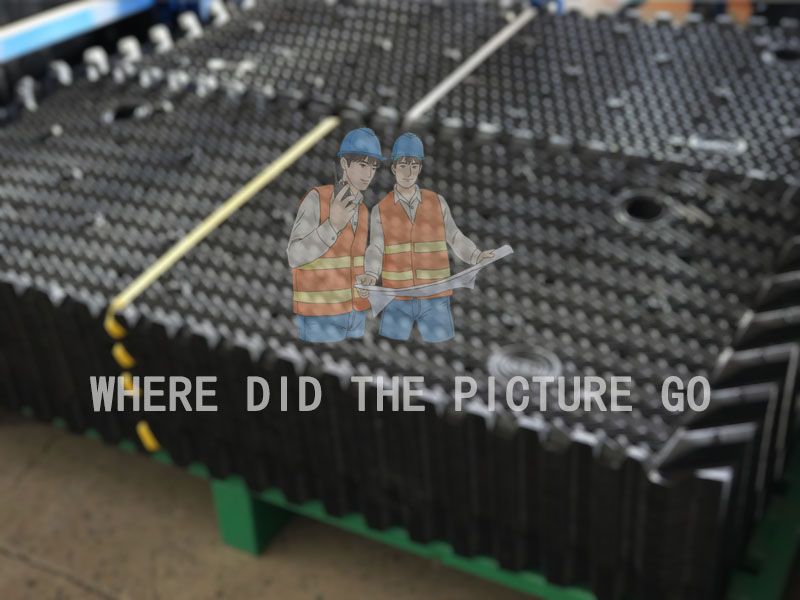
When a cooling system starts behaving unpredictably, most engineers first suspect pumps, valves, or control systems. But in long-term industrial operation, one of the most common hidden failure sources is the cooling tower fill.
From field troubleshooting experience, cooling tower fill media failure rarely happens suddenly. It develops gradually until system performance drops below acceptable limits.
The cooling tower packing inside a tower is exposed to continuous thermal cycling, water chemistry variation, and airborne contamination. Over time, these stresses accumulate and lead to performance breakdown.
Unlike mechanical components, tower fill failure is often silent and progressive.
Accumulated biological growth and suspended solids reduce the effective heat transfer surface of cooling tower fill media.
Water flow becomes uneven as passages inside cooling fill are partially blocked.
Heat and chemical stress gradually deform cooling tower packing filll, reducing airflow paths.
Repeated heating and cooling cycles weaken cooling tower fills material over time.
Improper chemical control accelerates scaling and biofouling.
Using the wrong design for water quality leads to early blockage of cooling tower packing.
Dust-heavy or industrial environments increase fouling rates significantly.
Operating beyond design conditions accelerates material degradation.
Rising outlet temperature is often the first visible sign of cooling tower fill media failure.
Fans and pumps work harder due to airflow restriction.
Visible dry zones indicate internal blockage of cooling fill.
Higher resistance across the fill layer signals structural degradation.
Minor fouling can sometimes be cleaned, but once structural integrity is lost, cleaning is no longer effective. At this stage, working with a reliable cooling tower fill replacement supplier becomes necessary.
Many industrial projects rely on china cooling tower filler manufacturers for cost-effective replacement solutions. In large retrofit cases, china cooling tower infill products are commonly used to restore system performance.
PVC Cooling Tower Packing may deform under high temperature or long-term chemical exposure.
PP Cooling Tower Fill Media performs better in harsh environments but still degrades under extreme conditions.
High biological contamination caused rapid clogging of cooling tower fill media, leading to severe efficiency loss.
Dust accumulation combined with hard water scaling caused complete blockage of cooling tower packing sections.
Long-term thermal stress led to deformation of cooling tower fills material, requiring full replacement.
Understanding how cooling tower fill fails is essential for maintaining industrial system stability. Most failures are not sudden—they are the result of long-term operational stress.
With proper diagnosis and timely replacement, system efficiency can be restored and maintained at stable levels.
Fouling and scaling are the most frequent causes.
Only minor fouling can be cleaned; structural damage requires replacement.
Typically 3–5 years depending on conditions.
Poor water treatment and incorrect selection are major factors.
Yes, different materials respond differently to stress and chemicals.
This article is based on real engineering failure analysis in industrial cooling systems, focusing on practical diagnosis and system reliability improvement.
Leave a comment
All fields marked with an asterisk (*) are required