About Us
We are professional cooling tower fills manufacturer, which can supply wide ranges of cooling tower fills with PVC, PP or CPVC materials.

Cooling towers are widely used in industrial facilities to remove excess heat from circulating water systems. Stable cooling performance is essential for maintaining safe equipment operation and consistent production efficiency. However, many industrial plants experience cooling tower performance problems that gradually reduce system efficiency.
Understanding the common causes of cooling tower performance decline helps operators identify issues early and implement corrective actions. Proper maintenance and optimized component selection can significantly improve cooling tower fill efficiency and reliability.
One of the most common cooling tower issues is reduced heat exchange efficiency. When heat transfer inside the tower becomes less effective, outlet water temperatures increase and cooling performance declines.
This issue is often caused by scaling, biological growth, or clogged fill structures that limit airflow and water distribution.
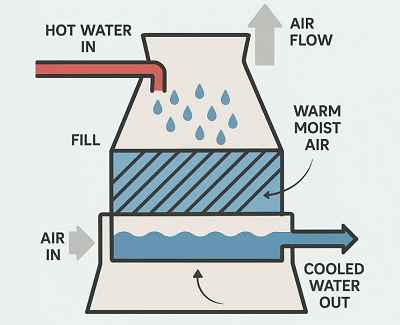
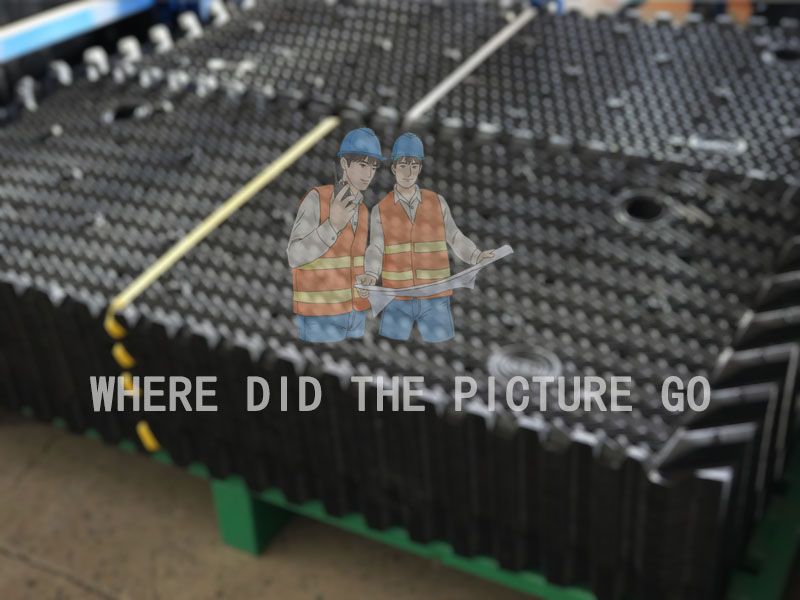
The cooling tower fill is responsible for creating a large surface area where air and water interact. Over time, minerals, sediment, and biological deposits may accumulate on the fill surface.
This buildup restricts airflow and reduces evaporation efficiency. In severe cases, clogged fill can significantly decrease cooling tower performance.
Efficient cooling requires uniform water distribution across the fill surface. If spray nozzles become blocked or misaligned, water may not spread evenly across the tower.
Uneven water distribution reduces effective heat transfer and can create localized hot spots within the cooling system.
Proper airflow is critical for effective cooling tower operation. Blocked air intake areas, debris accumulation, or damaged airflow components may reduce the amount of air entering the tower.
Restricted airflow decreases evaporation efficiency and limits cooling performance.
Water drift occurs when small droplets escape from the cooling tower through the airflow. Excessive drift not only wastes water but may also reduce cooling efficiency.
Modern drift elimination systems help minimize this issue and maintain system stability.
Regular inspection and maintenance help prevent cooling tower performance issues. Industrial facilities should monitor several key factors including water quality, airflow conditions, and internal component condition.
Several cooling tower components directly affect system performance and should be regularly inspected.
Cooling tower fillplays the most important role in heat transfer efficiency.
Air intake grillehelps regulate airflow entering the cooling tower.
Cooling tower water collectorreduces water drift loss and improves operational efficiency.
Cooling tower performance problems can reduce industrial system efficiency and increase operational costs. By identifying common issues such as fill blockage, uneven water distribution, and airflow restrictions, industrial facilities can maintain stable cooling tower operation.
If your cooling tower system is experiencing performance decline, selecting the right components and performing regular maintenance can significantly improve efficiency.
Request Cooling Tower Technical Support
Leave a comment
All fields marked with an asterisk (*) are required