About Us
We are professional cooling tower fills manufacturer, which can supply wide ranges of cooling tower fills with PVC, PP or CPVC materials.

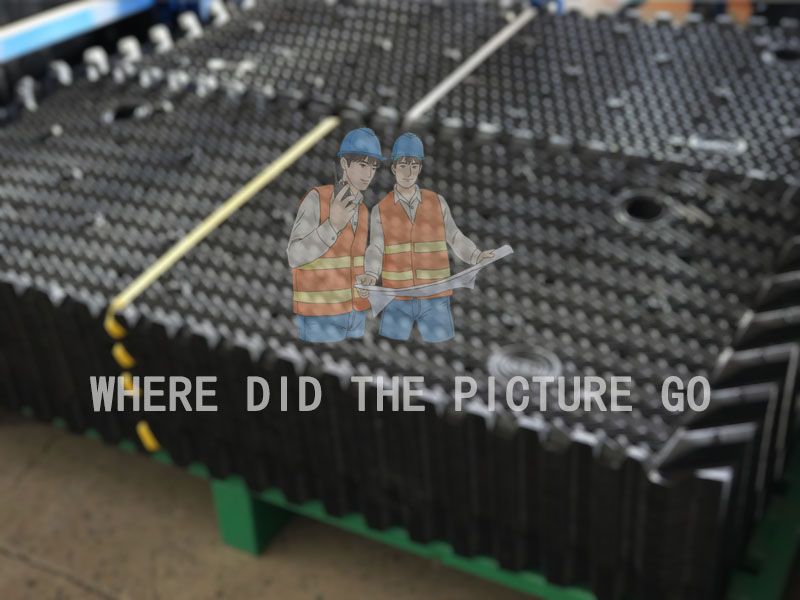
In industrial cooling projects, people often focus on tower size, fan power, or pump capacity. But in real engineering practice, the actual heat transfer efficiency is mainly determined inside one component—the cooling tower fill.
Good system performance is rarely about “bigger equipment”. It is usually about how well the cooling tower fill media is designed and matched to real operating conditions.
The cooling tower packing creates a controlled environment where water is broken into thin films or droplets, allowing heat to transfer efficiently to moving air.
When the tower fill is properly designed, the system achieves stable cooling even under fluctuating loads.
The first goal of cooling fill design is increasing water-air contact without creating excessive resistance.
If resistance is too high, fans consume more energy and reduce overall system efficiency.
Poor distribution causes dry zones inside cooling tower packing filll, reducing effective performance.
The cooling tower fills material must maintain shape under long-term thermal and chemical exposure.
Thin water films provide high efficiency but require clean water conditions for stable operation.
Droplet formation improves clog resistance, making it suitable for dirty water systems.
Modern systems often combine both approaches to balance efficiency and durability of cooling tower fill media.
PVC Cooling Tower Packing is commonly used in general industrial applications due to its stable performance and cost efficiency.
PP Cooling Tower Fill Media is selected when higher temperature resistance or chemical durability is required.
In many international projects, sourcing from a reliable china cooling tower filler supplier ensures consistent manufacturing quality and scalable production.
Excessively dense cooling tower packing improves theoretical efficiency but increases clogging risk in real operation.
Designs that do not consider actual water conditions lead to premature fouling of cooling tower fill media.
If fan capacity does not match fill resistance, system instability occurs.
Using unsuitable cooling fill material leads to deformation or early aging.
High humidity required a more open structure to prevent blockage in cooling tower packing.
Thermal stress required switching from standard PVC to more resistant cooling tower fills material.
Stable temperature control was achieved through optimized cooling tower fill media geometry.
Effective cooling system performance begins with correct design of the cooling tower fill. It is not just a component selection issue, but a system-level engineering decision.
When design, material, and operation are properly aligned, industrial cooling systems can maintain stable and efficient performance for years.
Balance between efficiency and airflow resistance is critical.
No, it can increase clogging and reduce long-term performance.
It determines whether open or dense structures should be used.
Mismatch between fill, airflow, and operating conditions.
Yes, through replacement or system modification.
This article is based on engineering design experience in industrial cooling systems, focusing on practical field performance rather than theoretical calculations.
Leave a comment
All fields marked with an asterisk (*) are required