About Us
We are professional cooling tower fills manufacturer, which can supply wide ranges of cooling tower fills with PVC, PP or CPVC materials.

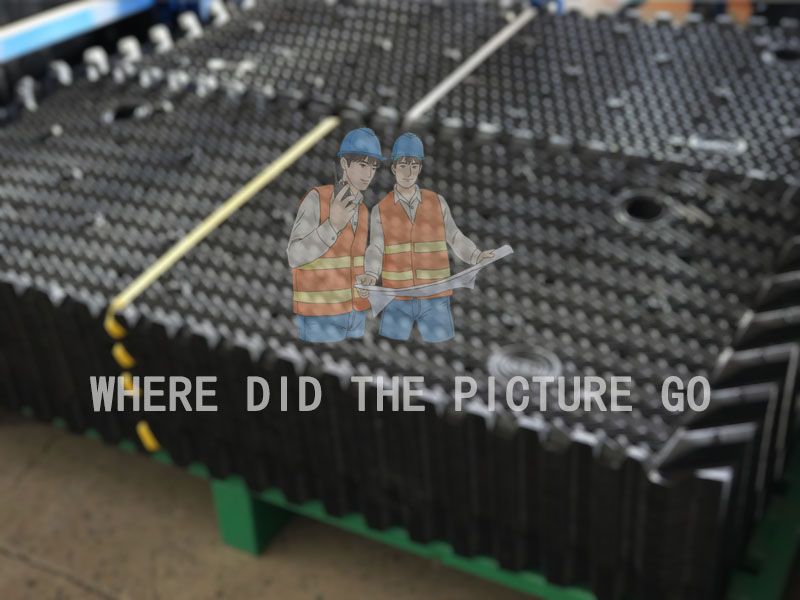
When a cooling tower starts losing capacity, most teams increase fan speed or adjust water flow. In practice, these actions rarely solve the root problem. In over a decade of field work, I have found that the real issue is usually the Cooling tower fill.
Wrong cooling tower fill selection, aging materials, or unsuitable structure can quietly reduce system performance. In hot regions like the Middle East or humid areas in Southeast Asia, this problem becomes even more critical due to harsh operating conditions.
Cooling tower fill is the working core inside the tower where heat exchange actually happens. Its purpose is to maximize the contact area between water and air.
From an engineering standpoint, cooling tower fill media performs three key functions:
Different designs of cooling fill or tower fill will directly affect cooling performance and system stability.
Film fill cooling tower systems rely on thin water films flowing across structured sheets.
It is best used in clean water environments where maintenance is well controlled.
Splash fill cooling tower designs break water into droplets through repeated impact.
Widely applied in heavy industry such as steel and mining.
Corrugated fill combines structured airflow channels with improved mechanical strength.
PVC cooling tower fill is the most widely used material in standard systems.
It is commonly used in PVC Cooling Tower Packing.
PP cooling tower fill is selected for more demanding environments.
For high-temperature systems, PP Cooling Tower Fill Media provides more reliable performance.
Cooling tower fill efficiency is not only about surface area. Based on real projects, the following factors are more critical:
In a petrochemical plant project, replacing old Cooling Tower Packing improved cooling efficiency by nearly 18**. At the same time, fan load was reduced due to better airflow paths.
Improper cooling tower fill design often leads to uneven airflow, which cannot be corrected by mechanical adjustments alone.
Choosing the right cooling tower fill requires understanding actual operating conditions.
Typical decision logic:
Many projects now source China Cooling Tower Infill for cost-effective solutions.
Cooling tower fill clogged issues occur frequently in industrial systems.
Mineral scaling reduces effective heat transfer area and blocks airflow channels.
Exposure to heat, UV, and chemicals leads to brittleness and deformation over time.
Maintenance is often underestimated but critical for long-term performance:
Preventive maintenance is far cheaper than system downtime.
A rubber processing plant in Malaysia experienced frequent clogging due to organic matter.
Solution:
Result:
In a refinery project in Kuwait, operating temperatures exceeded design limits.
Solution:
Result:
A mining site in Indonesia had high suspended solids in circulating water.
Solution:
Result:
Cooling tower fill is not just a replaceable part. It defines system efficiency and operational reliability.
A properly selected cooling tower fill media can:
For engineers and buyers, the key is matching the cooling tower fill design to actual working conditions.
Learn more solutions:Cooling Tower Packing Filll |China Cooling Tower Filler
It increases the contact surface between air and water to improve heat transfer.
Signs include reduced airflow, higher outlet temperature, and uneven water distribution.
Splash fill cooling tower designs are more suitable due to anti-clogging properties.
Not always. PP is better for high temperature, but PVC is more cost-effective for normal use.
Yes, cooling tower fill replacement can significantly restore system performance.
Written by a cooling tower engineer with 10+ years of experience in industrial system design and troubleshooting across Asia and the Middle East. The insights are based on real project cases and operational data.
Recommended references:
Leave a comment
All fields marked with an asterisk (*) are required