About Us
We are professional cooling tower fills manufacturer, which can supply wide ranges of cooling tower fills with PVC, PP or CPVC materials.

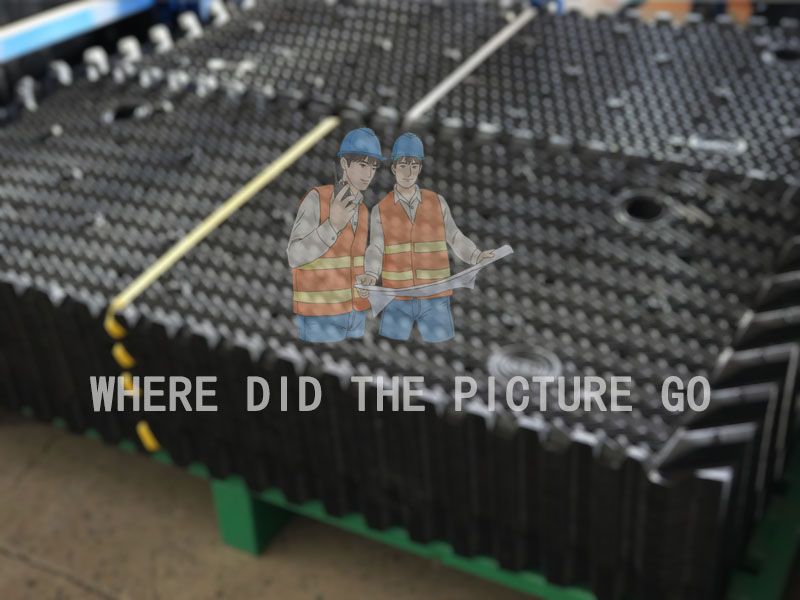
If your cooling tower cannot maintain stable outlet temperature, increasing fan speed or pump flow is only a temporary fix. In most industrial cases I have handled, the root issue lies in the Cooling tower fill.
Across projects in Southeast Asia and the Middle East, I have seen cooling efficiency drop by over 25** simply due to incorrect cooling fill selection. Many systems are designed properly at the beginning, but performance declines because the cooling tower fill material no longer matches actual operating conditions.
Cooling tower fill is the internal medium responsible for maximizing the contact between air and water. It determines how effectively heat is removed from circulating water.
From a practical engineering perspective, cooling tower fill media works by:
Whether referred to as cooling fill, tower fill, or Cooling Tower Packing, this component directly controls thermal performance.
Film fill cooling tower designs use closely spaced sheets to create continuous water films.
Best suited for clean water systems such as HVAC or closed-loop cooling.
Splash fill cooling tower systems break water into droplets through multiple impact layers.
Corrugated fill is a hybrid design combining structural strength and improved airflow channels.
PVC cooling tower fill is widely used due to its cost-performance balance.
Commonly used in PVC Cooling Tower Packing systems.
PP cooling tower fill is designed for more demanding conditions.
Widely applied in PP Cooling Tower Fill Media for petrochemical and industrial cooling.
Cooling tower fill efficiency is not only about surface area. In real operation, the following factors matter more:
In a refinery project in the UAE, replacing old China Cooling Tower Infill increased heat rejection efficiency by 20**. At the same time, energy consumption dropped due to reduced airflow resistance.
Improper cooling tower fill design often creates uneven airflow zones, which cannot be corrected by adjusting fan speed.
From a procurement standpoint, selection should follow actual operating conditions instead of catalog data.
Typical selection logic:
Many buyers choose China Cooling Tower Filler due to reliable performance and competitive cost.
Cooling tower fill clogged problems are frequent in tropical regions.
Mineral deposits accumulate on cooling tower fill material, reducing effective surface area.
Long-term exposure to heat and chemicals causes brittleness and deformation.
Based on field experience, maintenance should not be reactive but scheduled:
Proper cooling tower fill maintenance reduces unexpected downtime.
A food processing plant in Thailand experienced rapid clogging due to organic contamination.
Solution:
Result:
In a Middle East power plant, inlet water temperature exceeded 70°C.
Solution:
Result:
A steel mill in Vietnam used heavily contaminated circulating water.
Solution:
Result:
Cooling tower fill determines whether your system performs efficiently or struggles continuously.
Correct selection of cooling tower fill media can:
For long-term performance, selection must consider real operating conditions, not just initial cost.
Explore more solutions here:Cooling Tower Packing |Cooling Tower Packing Filll
Main causes include biological growth, suspended solids, and poor filtration.
Typically every 3–5 years depending on water quality and operating conditions.
PVC is cost-effective for normal conditions, while PP is better for high temperature.
No, it is mainly for dirty water systems due to lower efficiency.
Yes, poor design increases airflow resistance, leading to higher fan energy use.
The author is a cooling tower engineer with over 10 years of field experience in system optimization, troubleshooting, and international project support. The content reflects real operational data and engineering decisions.
Recommended references:
Leave a comment
All fields marked with an asterisk (*) are required