About Us
We are professional cooling tower fills manufacturer, which can supply wide ranges of cooling tower fills with PVC, PP or CPVC materials.

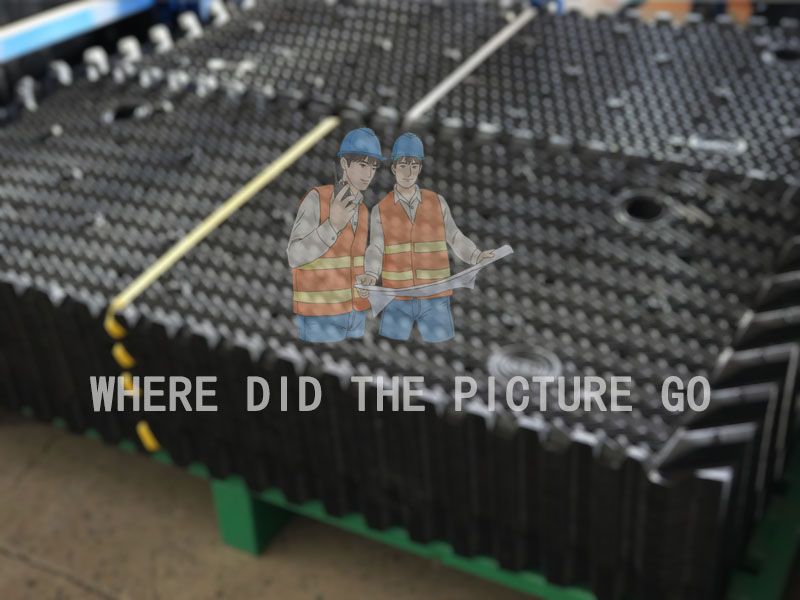
In many industrial facilities, cooling tower problems are not caused by equipment failure but by incorrect selection or long-term deterioration of the internal fill system. When cooling performance gradually decreases, many operators check pumps, fans, and motors first, while the real issue is often hidden inside the tower.
After working on cooling tower projects for many years, I have seen many plants continue operating with outdated or unsuitable fill materials. The tower can still run every day, but the heat transfer ability has already dropped significantly.
For industrial buyers searching for a reliable Cooling tower fill solution, the most important factor is not only the product itself. The real question is whether the fill design matches the actual operating environment.
Different industries have different requirements. A factory in Southeast Asia may face biological growth because of high humidity, while a Middle East plant may deal with high temperature and intensive evaporation. These conditions require different engineering decisions.
Cooling tower fill works as the main heat exchange surface inside the cooling tower. It improves the contact between hot water and air, allowing heat to be removed through evaporation.
A properly designed cooling tower fill media helps achieve:
When fill performance decreases, the cooling tower usually needs longer operating time to achieve the same cooling result. This increases energy consumption and affects production stability.
For this reason, engineers usually consider fill condition as one of the first inspection points during cooling tower performance analysis.
A film fill cooling tower uses specially formed sheets to create a thin water film. The large surface area allows air and water to exchange heat more effectively.
This type of fill is widely used because it provides excellent thermal performance.
Main advantages include:
However, engineers should pay attention to water quality. If suspended solids or biological materials enter the system, narrow channels may become blocked over time.
Splash fill works through repeated water impact. Instead of forming a continuous water film, it breaks water into smaller droplets.
This makes it suitable for applications where water contains more impurities.
Typical applications include:
For cooling tower fill for dirty water applications, splash structures are often selected because maintenance requirements are lower.
Corrugated fill has become popular in industrial cooling upgrades because it provides a good balance between efficiency and reliability.
The angled structure creates stable airflow channels while maintaining effective water contact.
Many replacement projects choose corrugated designs because they provide improved performance without requiring major modifications to existing towers.
The material of fill plays an important role in determining how long the cooling system can operate effectively.
PVC is commonly used because it provides stable performance for many general applications.
PVC Cooling Tower Packing is suitable for many standard industrial cooling systems.
Advantages include:
However, continuous high temperature operation may require more durable materials.
PP material is often chosen for more demanding conditions.
PP Cooling Tower Fill Media provides better resistance against heat and chemical exposure.
It is commonly used in:
In real projects, cooling performance rarely decreases because of one single reason. Usually, several factors work together.
The most common causes include:
A well-designed cooling tower fill design must consider both thermal performance and practical maintenance requirements.
In one factory upgrade project, replacing old fill improved cooling efficiency by approximately 17**. The biggest improvement came from restoring airflow passages that had been restricted by years of deposits.
There is no single fill type suitable for every application. Engineers usually select based on actual working conditions.
Important evaluation factors include:
For customers looking for a professional cooling tower fill supplier, technical understanding is as important as production ability.
A reliable supplier should provide solutions for different applications rather than simply offering standard products.
Cooling tower fill clogged problems are very common in industrial environments.
Main causes include:
Blocked fill reduces airflow and limits heat exchange performance.
When minerals accumulate on fill surfaces, the available heat transfer area decreases.
This problem often appears in areas with hard water conditions.
After years of exposure to heat, sunlight, and chemicals, fill sheets may lose strength and become fragile.
At this stage, cleaning cannot fully restore performance, and replacement becomes necessary.
A manufacturing plant in Thailand experienced unstable cooling during the hottest months of the year.
Inspection showed that the existing fill had severe biological contamination caused by humid operating conditions.
The engineering solution was replacing the old fill and improving water management procedures.
The plant achieved more stable cooling performance and reduced maintenance interruptions.
A chemical plant in the UAE operated under extreme summer conditions. The existing fill material showed deformation after long-term high temperature exposure.
The project team selected a PP-based solution with improved temperature resistance.
The upgraded system maintained better stability during peak operation periods.
A wastewater treatment facility in Southeast Asia required a cooling solution that could handle contaminated water.
The previous film structure required frequent cleaning because of blockage.
After switching to a more suitable open structure, the maintenance interval was extended and operating reliability improved.
For industrial buyers, selecting the right manufacturer is an important part of project success.
An experienced cooling tower filler factory should understand:
Many international customers choose China Cooling Tower Filler suppliers because they can provide stable production capacity and customized solutions for different projects.
Products such as Cooling Tower Packing Fill and China Cooling Tower Infill are widely used in industrial replacement applications.
Cooling tower fill selection has a direct influence on industrial cooling stability. Choosing the correct structure and material can improve efficiency, reduce maintenance frequency, and extend equipment service life.
For engineers and procurement teams, the best solution comes from understanding actual operating conditions rather than selecting products only by price.
A reliable cooling tower starts with a properly designed heat exchange system.
It increases air and water contact area and improves heat transfer efficiency.
PP cooling tower fill is usually preferred because of better temperature resistance.
Correct selection, proper maintenance, and good water treatment are the main factors.
Replacement is needed when fill becomes damaged, heavily blocked, or unable to maintain cooling performance.
They should check tower dimensions, water conditions, operating temperature, and required performance.
This article is written from the perspective of an industrial cooling engineer with over 10 years of experience in cooling tower design, maintenance, and replacement projects. The technical recommendations are based on practical applications across Southeast Asia, the Middle East, Japan, and Korea, with reference to industry knowledge from ASHRAE and Cooling Technology Institute (CTI).
Leave a comment
All fields marked with an asterisk (*) are required