About Us
We are professional cooling tower fills manufacturer, which can supply wide ranges of cooling tower fills with PVC, PP or CPVC materials.

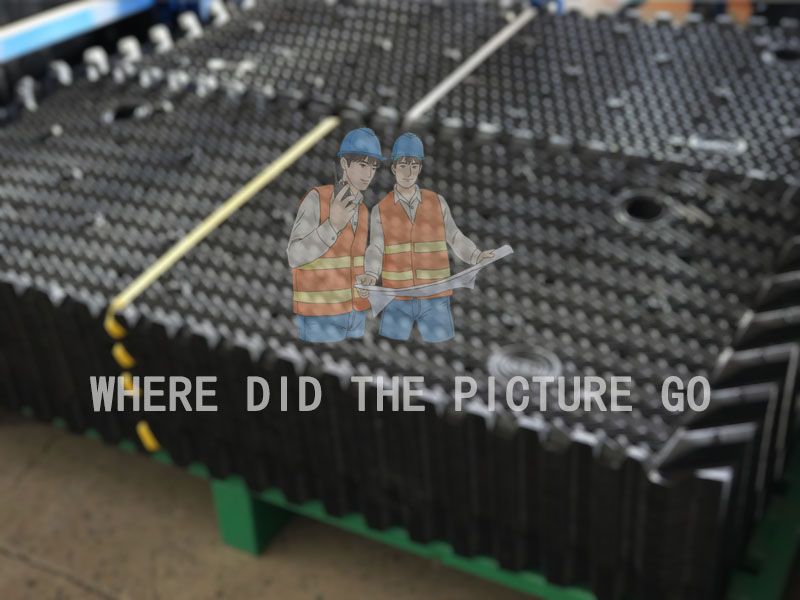
In industrial cooling projects, many problems do not appear immediately after installation. A cooling tower may operate normally for several years before showing signs of reduced performance. When this happens, the internal heat exchange section is often the first place engineers inspect.
From practical experience, I have seen many factories spend time adjusting pumps, fans, and control systems, but the real limitation was the condition of the fill material inside the tower.
A suitable Cooling tower fill helps maintain stable cooling performance by improving water distribution, increasing air-water contact, and supporting efficient heat transfer.
For industrial users in Southeast Asia, the Middle East, Japan, and Korea, choosing the right fill solution requires understanding local climate, water quality, and operating conditions rather than simply selecting a standard product.
The cooling tower fill section is where the main heat exchange process happens. Hot water entering the tower needs enough contact time with moving air to release heat effectively.
Without an effective fill structure, water falls directly through the tower and loses cooling potential.
A well-designed cooling tower fill media can improve:
In many retrofit projects, improving the fill system provides a more practical result than replacing major mechanical equipment.
Every cooling tower has different operating conditions. The fill design must match the application to achieve reliable performance.
Important design considerations include:
A fill design that works well in a clean water system may not perform well in a wastewater application.
A film fill cooling tower creates a thin water layer across the surface of structured sheets. This increases the contact area between water and air.
Film fill is commonly selected for systems where cooling efficiency is the main priority.
Typical applications include:
The main advantage is excellent thermal performance. However, the design requires better water management because small channels can collect deposits over time.
Splash fill cooling tower systems use repeated water impact to create smaller droplets. This approach reduces dependence on narrow flow channels.
This makes splash fill suitable for more challenging environments.
Common applications include:
When engineers search for cooling tower fill for dirty water, splash structures are often considered because they provide better resistance against blockage.
Corrugated fill provides a balanced solution between heat transfer efficiency and operating reliability.
The angled sheet structure helps guide airflow and water movement while maintaining effective contact between both fluids.
Many industrial users choose corrugated fill during modernization projects because it improves performance without requiring complete tower reconstruction.
The material selection directly influences service life, especially in regions with high temperature or aggressive operating conditions.
PVC Cooling Tower Packing remains one of the most widely used options in industrial cooling systems.
PVC advantages include:
It is suitable for many normal temperature applications where water quality is controlled.
PP Cooling Tower Fill Media is preferred when higher durability is required.
PP material provides:
This makes it suitable for petrochemical, power, and heavy industrial applications.
Cooling tower fill efficiency depends on the relationship between design, material, and operating environment.
Key improvement methods include:
In one Southeast Asian factory project, replacing aged fill restored stable cooling performance and improved operating efficiency by approximately 16**.
The improvement was not caused by changing the tower size or fan power. It came from recovering the original heat exchange condition.
Cooling tower fill clogged conditions are frequently found in industrial systems using untreated or recycled water.
Common causes include:
Blocked passages reduce airflow and lower the overall cooling effect.
Hard water can create mineral deposits on fill surfaces. Over time, these deposits reduce the available heat exchange area.
Long-term exposure to sunlight, chemicals, and temperature changes can weaken fill sheets.
When deformation becomes serious, cleaning cannot restore the original performance.
A factory in Vietnam experienced unstable cooling during the hot season. The existing fill had operated for many years and showed heavy biological contamination.
After inspection, engineers recommended a new fill structure combined with improved water treatment control.
The result was more stable cooling operation and fewer maintenance interruptions.
A processing plant in Saudi Arabia faced repeated problems caused by high operating temperatures.
The original material could not maintain long-term structural stability.
The solution was upgrading to PP material with stronger temperature resistance, improving reliability during summer operation.
A wastewater facility in Thailand required a cooling solution capable of handling high impurity levels.
The previous film structure required frequent cleaning because of blockage.
After changing to a more suitable splash-based design, maintenance frequency was reduced.
For industrial buyers, selecting the right manufacturer is an important part of project success.
A reliable cooling tower fill supplier should provide:
Many international customers choose a cooling tower filler factory that can support both new tower projects and replacement requirements.
Products such as Cooling Tower Packing Fill, China Cooling Tower Infill, and China Cooling Tower Filler are commonly used in industrial cooling applications.
Waiting until the cooling system completely fails usually creates unnecessary production risks.
Professional engineers normally recommend evaluating:
A planned replacement schedule helps reduce emergency maintenance costs and improves system reliability.
Cooling tower fill is a key component that determines how effectively a cooling tower transfers heat.
The right combination of structure, material, and maintenance strategy can improve efficiency, reduce downtime, and extend system lifespan.
For industrial users, the best cooling solution comes from matching the fill design with actual operating conditions.
It increases air and water contact area to improve heat transfer efficiency.
PP cooling tower fill is often selected because it provides better temperature resistance.
Blockage is usually caused by dirt, algae, scale, and poor water treatment.
Correct selection, regular maintenance, and proper water management are the main solutions.
Replacement is recommended when fill damage, severe fouling, or efficiency loss affects operation.
This article is written from the perspective of an industrial cooling engineer with more than 10 years of practical experience in cooling tower installation, maintenance, and optimization projects. The engineering insights are based on real applications across Southeast Asia, the Middle East, Japan, and Korea, with reference to technical knowledge from ASHRAE and Cooling Technology Institute (CTI).
Leave a comment
All fields marked with an asterisk (*) are required