
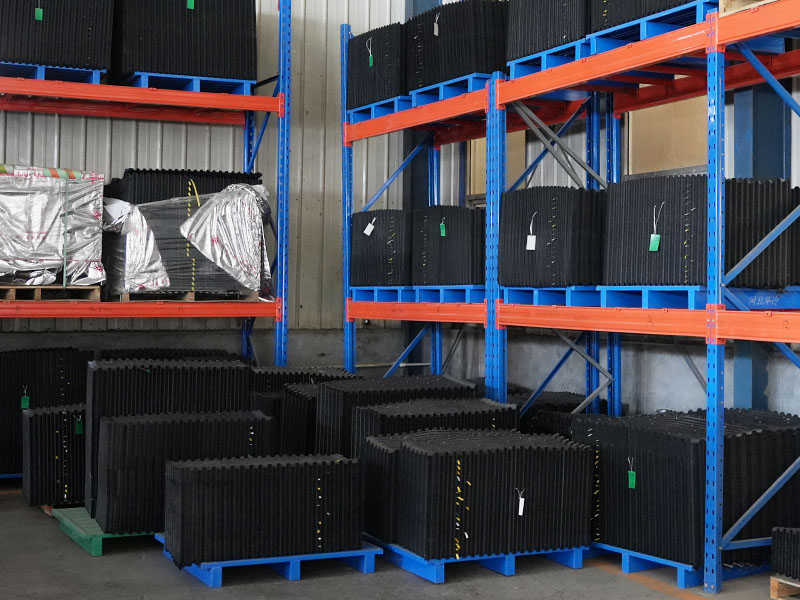
Not all cooling towers operate with clean water. In chemical plants and industrial zones, the Cooling Tower Fill must handle suspended solids, scaling tendencies, and biological growth.
Why water quality defines fill performance
Poor water quality accelerates fouling, blocks flow channels, and reduces effective heat transfer area. In these environments, fill structure is often more important than theoretical efficiency.
Fill structures that resist fouling
Low-density Film Fill
Wider channel Film Fill designs reduce clogging risk while still maintaining acceptable thermal performance. Corrugated Fill geometry helps guide water evenly.
Splash Fill systems
Splash systems are highly tolerant of solids and bio-growth. They are often selected where water treatment is limited or unstable.
Material compatibility with chemicals
- PP fill for chemical resistance
- PVC fill for cost-effective applications with moderate chemistry
- HDPE for robust splash elements
- FRP for long-term structural integrity
Tower configurations in chemical plants
Many chemical plants use multi-cell induced-draft towers. Modular Cooling Tower Media allows partial replacement without full system shutdown.
Performance expectations in fouling environments
In challenging water conditions, stability matters more than peak efficiency. Slightly lower thermal performance is acceptable if it avoids frequent cleaning and unplanned downtime.
Maintenance strategies that work
- Routine visual inspection
- Scheduled mechanical cleaning
- Biological growth control
- Replacing modules instead of full packs
Complementary products for system protection
To protect fills from debris and uneven flow, we supply Air intake grille and Cooling tower water collector, improving long-term reliability.
Conclusion
In chemically aggressive or dirty water environments, the right Cooling Fill minimizes fouling risk and maintenance cost. Proper selection protects both performance and operational continuity.
Need help with difficult water conditions?
Send us your water analysis, photos, or operating history. We can recommend fill types designed to handle fouling and chemical exposure.
Contact us
Leave a comment
All fields marked with an asterisk (*) are required