About Us
We are professional cooling tower fills manufacturer, which can supply wide ranges of cooling tower fills with PVC, PP or CPVC materials.

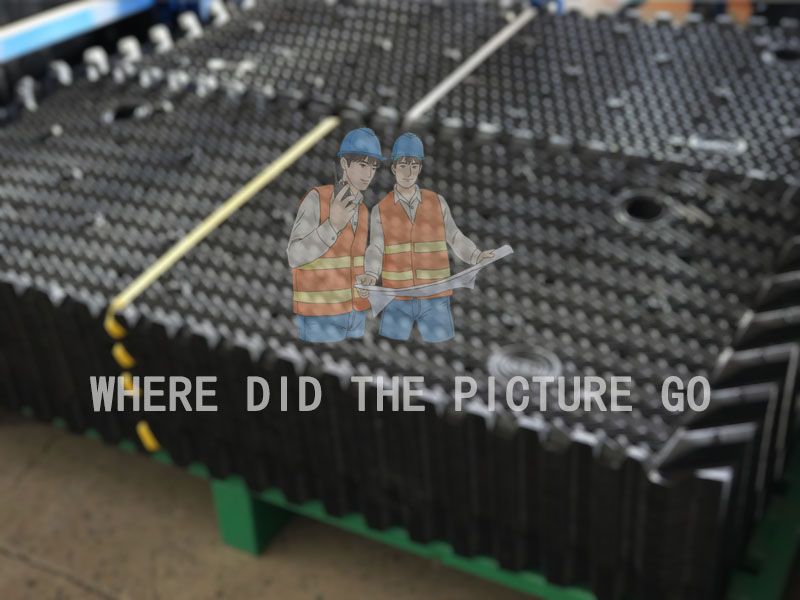
In a lot of projects I’ve seen, people assume cooling performance is mainly about fan power or water flow. But once you open up the tower, the real story becomes clear—the design of the cooling tower fill is what really controls how efficiently heat is removed.
If the cooling tower fill media is not properly designed or selected, even a well-sized system will struggle to meet its cooling targets. This is especially true in Southeast Asia, where high humidity reduces natural evaporation efficiency.
Cooling tower packing is the structured medium that spreads water and creates a large contact surface with air. The more effective the contact, the better the cooling result.
That’s why experienced engineers always treat cooling fill as the heart of the tower, not just a supporting component.
The shape and texture of cooling tower fills material determine how water flows and spreads.
A good cooling tower fill design must allow air to pass through easily without excessive resistance.
The longer water stays in contact with air, the more efficient the cooling process becomes.
In real-world conditions, resistance to fouling is just as important as theoretical efficiency.
Film fill cooling tower structures maximize surface contact.
Splash fill cooling tower focuses on breaking water into droplets.
Some modern systems combine both approaches for balanced performance.
PVC Cooling Tower Packing is widely used due to its affordability.
PP Cooling Tower Fill Media offers better durability in high temperature and chemical environments.
Choosing the right material is just as important as choosing the right structure.
High-efficiency designs often fail in dirty water conditions because they clog easily.
Humidity, dust, and temperature all affect how cooling tower packing filll performs.
Every system is different. A one-size-fits-all tower fill rarely works in industrial environments.
High humidity reduced cooling efficiency. Optimizing cooling tower fill media design improved performance without increasing energy use.
Dust accumulation blocked airflow. Switching to a more open cooling fill structure reduced maintenance needs.
Undersized cooling tower packing limited system capacity. Upgrading design increased throughput.
The effectiveness of a cooling system depends heavily on the design of the cooling tower fill. A well-designed solution improves efficiency, reduces maintenance, and ensures stable operation.
In practice, the best design is not the most advanced one—it’s the one that fits your actual working conditions.
Film fill offers the highest efficiency under clean conditions.
Splash fill is more resistant to clogging and fouling.
Yes, especially in high temperature and chemical environments.
Yes, optimizing fill can significantly improve system efficiency.
Whenever system conditions change or performance declines.
This article is based on hands-on engineering experience in industrial cooling systems, focusing on practical design improvements that deliver measurable results.
Leave a comment
All fields marked with an asterisk (*) are required