About Us
We are professional cooling tower fills manufacturer, which can supply wide ranges of cooling tower fills with PVC, PP or CPVC materials.

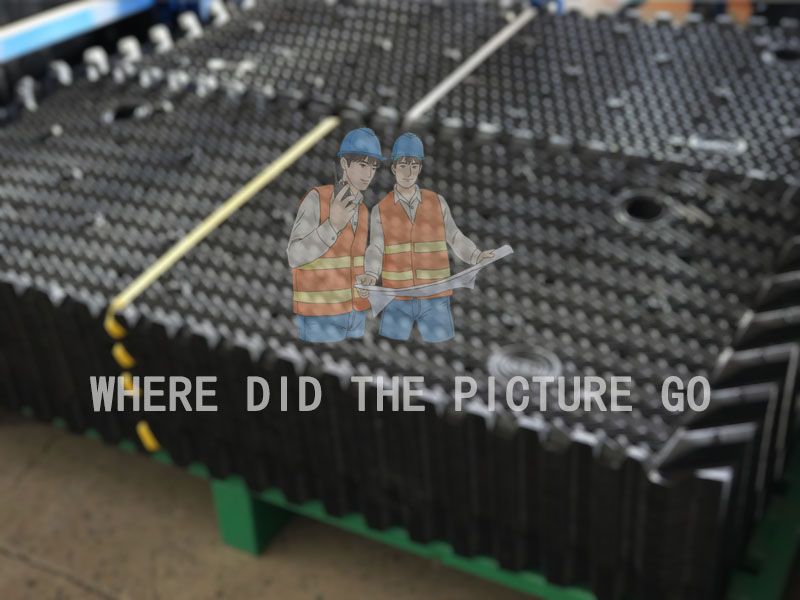
When engineers talk about improving cooling tower performance, the conversation usually goes straight to fans, pumps, or drift eliminators. But in reality, the most impactful component is often hidden in the middle—the cooling tower fill. Choosing the right fill is not just a design step, it’s a long-term decision that affects efficiency, maintenance, and system stability.
From my experience working with plants in Southeast Asia and Japan, many performance issues come down to one simple thing: the wrong cooling tower fill media for the actual operating condition.
Cooling tower packing is designed to maximize contact between air and water. By spreading water into thin films or droplets, it allows heat to dissipate efficiently through evaporation.
If you think of the cooling tower as a machine, then cooling fill is the core working surface where energy exchange happens.
This is the first thing I always ask clients. Clean water systems can use high-efficiency film fill, while systems with suspended solids need more robust solutions.
High temperature environments can deform standard materials. In such cases, pp cooling tower fill is a safer choice.
If your team cannot clean frequently, avoid designs that are prone to clogging.
Fluctuating loads require flexible cooling tower fill design that can handle varying water distribution.
Film fill cooling tower systems provide excellent thermal efficiency.
Splash fill cooling tower is more forgiving in dirty environments.
Corrugated fill offers a balanced approach between efficiency and durability.
PVC Cooling Tower Packing is widely used due to its cost-effectiveness.
PP Cooling Tower Fill Media performs better in high temperature and chemical-heavy environments.
Many projects select high-efficiency cooling tower fills material without considering water quality, leading to rapid clogging.
In Southeast Asia, biological growth is a major issue. In the Middle East, dust and scaling are more common.
Old cooling tower packing filll reduces performance gradually, making the issue harder to detect until it becomes serious.
Originally used film fill, but heavy biological growth caused frequent blockage. Switching to splash cooling fill improved uptime.
Strict performance requirements required high-efficiency cooling tower fill media with precise water distribution control.
Dust accumulation reduced airflow. Upgrading tower fill structure improved ventilation and cooling consistency.
Selecting the right cooling tower fill is one of the most important decisions in cooling system design and maintenance. A well-matched solution improves efficiency, reduces downtime, and ensures stable operation.
In real projects, practical choices always outperform theoretical ones.
Splash fill is usually the safest option in contaminated systems.
Inspect and upgrade the existing fill if necessary.
Yes, especially in high temperature or chemical environments.
Indirectly yes, by reducing efficiency and increasing load on other components.
At least once every 6–12 months depending on operating conditions.
This article is based on practical engineering experience from multiple industrial cooling tower projects, focusing on real-world problem solving and system optimization.
Leave a comment
All fields marked with an asterisk (*) are required