About Us
We are professional cooling tower fills manufacturer, which can supply wide ranges of cooling tower fills with PVC, PP or CPVC materials.

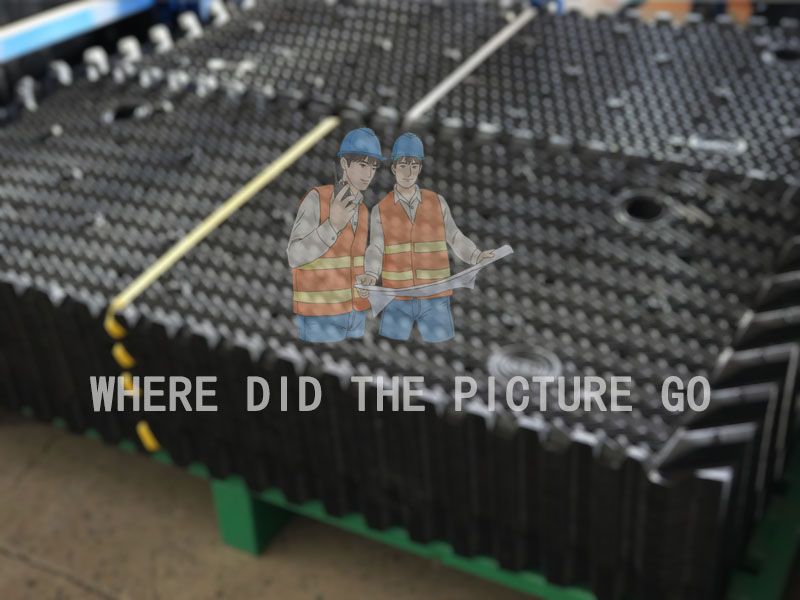
In many industrial sites, cooling systems do not fail suddenly—they slowly lose efficiency. One of the most overlooked reasons is aging or mismatched cooling tower fill. Engineers often focus on pumps or fans, but the real bottleneck is inside the tower.
For projects in Southeast Asia and the Middle East, high humidity, dust, and poor water quality accelerate cooling tower fill degradation. Without a proper upgrade strategy, systems become unstable and energy consumption rises.
Cooling tower fill media is designed to increase the contact time and surface area between air and water. It improves evaporation efficiency and determines how effectively heat is removed.
From an engineering perspective, tower fill is not just a component—it is the thermal engine of the cooling tower.
Film fill cooling tower structures spread water into thin layers over large surfaces.
Splash fill cooling tower breaks water into droplets using bars or grids.
Corrugated fill combines structured flow with moderate fouling resistance.
PVC Cooling Tower Packing is commonly used in standard cooling systems.
PP Cooling Tower Fill Media is preferred in more demanding environments.
The efficiency of cooling fill directly impacts system output. Poorly performing cooling tower fill media increases approach temperature and reduces production stability.
In real projects, replacing old cooling tower fill can improve efficiency by 10–20**, especially when airflow resistance is reduced.
Key performance drivers:
Selecting the right cooling tower fill design requires understanding operating conditions.
Also consider:
Related product links:
Cooling tower fill clogged is common in systems with poor filtration. It blocks airflow and reduces heat exchange.
Hard water leads to mineral deposits on cooling tower fill material, reducing effective surface area.
Over time, UV exposure and chemical attack weaken the structure, requiring cooling tower fill replacement.
High humidity and biological growth caused rapid fouling. Switching from film fill to splash fill cooling tower design reduced cleaning frequency by 40**.
Continuous operation above 60°C damaged standard PVC fill. Upgrading to pp cooling tower fill improved durability and reduced shutdowns.
System using recycled water faced constant blockage. Installing cooling tower fill for dirty water restored stable cooling performance.
Reliable cooling performance depends heavily on the condition of cooling tower fill. A well-planned upgrade strategy can improve efficiency, reduce maintenance, and extend system life.
For industrial users, the key is not just selecting a product, but matching the fill type to real operating conditions.
Fouling, scaling, and structural degradation reduce heat transfer efficiency.
Typically every 3–5 years depending on operating conditions and material type.
Splash fill is generally the most reliable option for contaminated systems.
Yes, improved resistance to clogging reduces maintenance interruptions.
PP performs better in high temperature and aggressive environments.
This content is written from the perspective of a cooling tower engineer with over 10 years of field experience. The recommendations are based on real industrial applications and align with guidelines from ASHRAE and Cooling Technology Institute CTI.
Leave a comment
All fields marked with an asterisk (*) are required