About Us
We are professional cooling tower fills manufacturer, which can supply wide ranges of cooling tower fills with PVC, PP or CPVC materials.

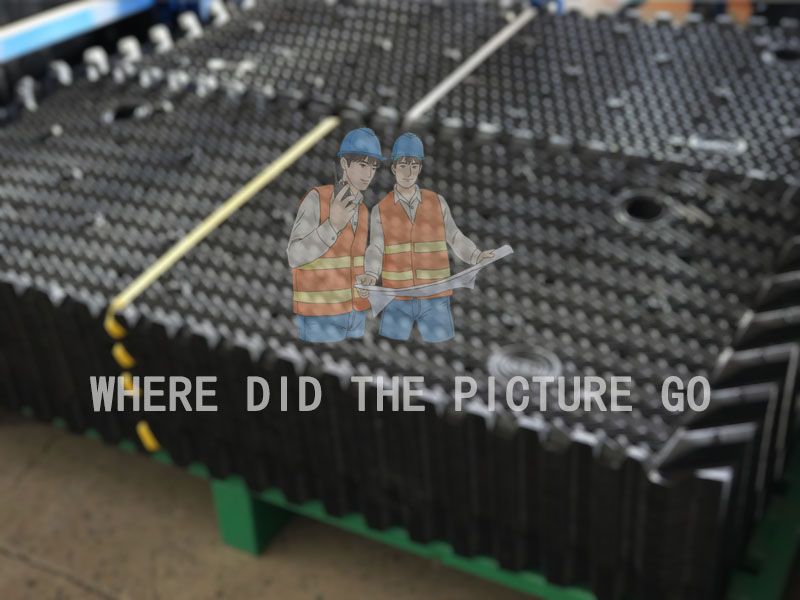
In industrial cooling systems, low performance often stems from improper cooling tower fill selection. Many Southeast Asian and Middle Eastern facilities struggle with unstable water quality and high ambient temperatures, which exacerbate efficiency losses.
Choosing the right cooling tower fill media is critical. Correct selection improves heat transfer, reduces maintenance, and extends operational lifespan, while poor choices lead to clogged fills, scaling, and energy waste.
Cooling tower fill increases the contact area between water and air inside a tower. By creating thin films or droplets, it allows efficient heat removal. Even top-quality fans and pumps cannot compensate for poor fill performance.
Film fill cooling tower spreads water into thin layers over structured sheets, maximizing surface area for heat exchange.
Splash fill cooling tower breaks water into droplets, providing durability and lower maintenance in dirty water conditions.
Corrugated fill provides structured flow channels, offering a balance between efficiency and resistance to fouling.
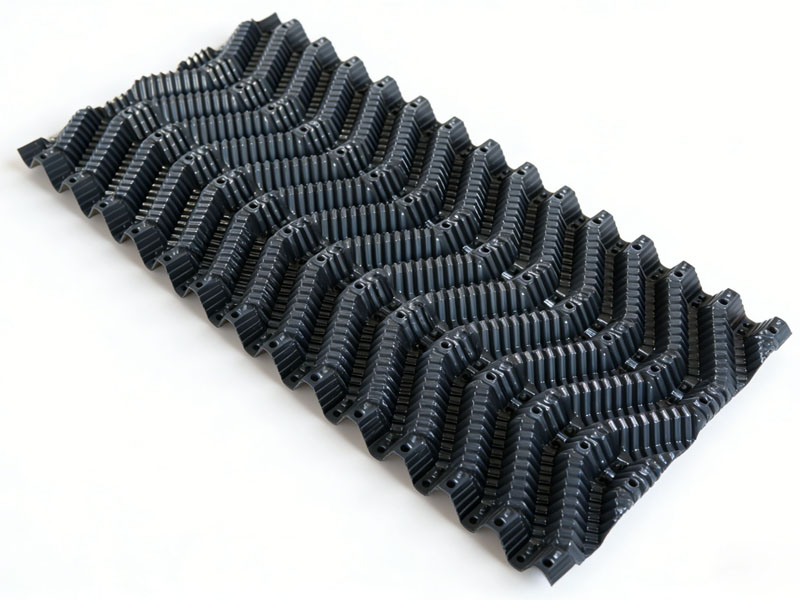
PVC cooling tower fill material is cost-effective and lightweight, making installation easy. However, it has limited heat and chemical resistance.
PP Cooling Tower Fill Media is highly durable, resistant to heat and chemicals, and suitable for demanding industrial applications.
The cooling tower fill efficiency determines how effectively heat is removed. Optimal fill increases contact surface, improves airflow, and reduces fan energy consumption.
Key performance considerations include:
In one Southeast Asian plant, upgrading to structured PP film fill improved system cooling capacity by 15** while reducing pump energy usage.
Selection depends on:
Guidelines:
Related internal products:
Debris and algae cause cooling tower fill clogged, reducing cooling capacity and increasing energy use.
Mineral deposits reduce heat transfer efficiency, especially in regions with hard water.
Over time, cooling tower fill material loses structural integrity, leading to deformation and decreased performance.
Frequent clogging due to suspended solids was solved by switching to splash fill, reducing maintenance and stabilizing operation.
PVC fill failed under heat stress; upgrading to pp cooling tower fill extended service life and reduced downtime.
Using cooling tower fill for dirty water improved reliability and decreased cleaning frequency by 50**.
Choosing the correct cooling tower fill is essential for system stability and efficiency. Real engineering experience shows that matching fill type and material to water quality and temperature conditions delivers measurable performance improvements.
Signs include reduced efficiency, visible damage, or frequent clogging.
Splash fill or PP-based designs are recommended for contaminated water systems.
Yes, PP is more durable than PVC in high temperature or chemical environments.
Replacing old or inefficient fill can improve system performance by up to 15**.
Regular inspection, cleaning, and timely replacement based on operating conditions.
Written by a cooling tower engineer with over 10 years of industrial experience across Southeast Asia and the Middle East. Insights are based on real-world applications, troubleshooting, and optimization practices, following ASHRAE and Cooling Technology Institute CTI guidelines.
Leave a comment
All fields marked with an asterisk (*) are required