About Us
We are professional cooling tower fills manufacturer, which can supply wide ranges of cooling tower fills with PVC, PP or CPVC materials.

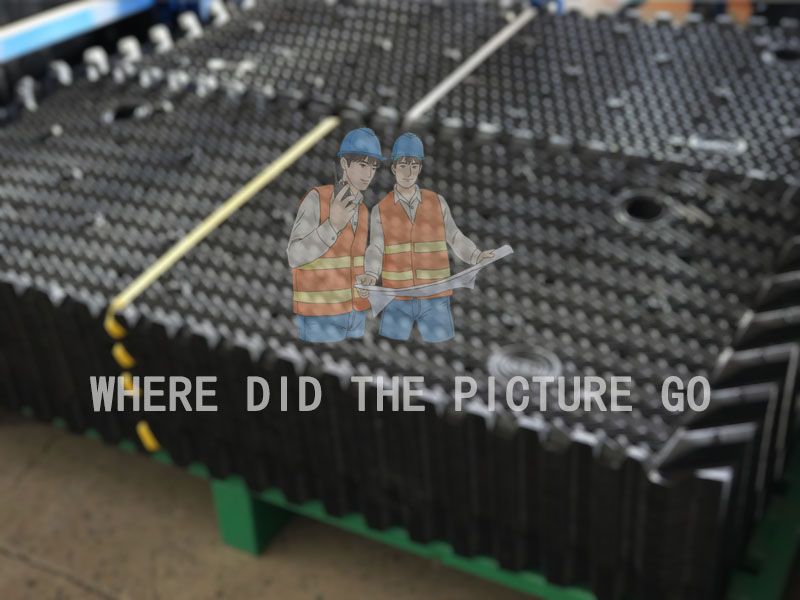
If you’ve ever struggled with low cooling efficiency in your industrial cooling towers, chances are the culprit is the cooling tower fill. Many engineers underestimate how much the right tower fill affects system performance, energy consumption, and maintenance cycles. In Southeast Asia, the Middle East, and Japan, high temperatures and water impurities make choosing the right cooling tower fill media critical for stable operation.
From clogged fills to unstable outlet temperatures, these issues directly impact production. In real projects, optimizing cooling fill selection has improved system efficiency by more than 10** while reducing downtime significantly.
Cooling tower fill is the core heat exchange component inside the tower. Its job is simple in theory: increase the surface area of water and extend the contact time between air and water. In practice, the structure, material, and design of the fill determine how efficiently heat is removed.
Without proper cooling tower fill media, even high-performance fans and pumps cannot deliver expected results. Engineers often realize this only after facing efficiency drops or high energy costs.
Film fill spreads water into thin layers across structured sheets. This design maximizes contact surface, making it the most efficient option for clean water systems.
Splash fill cooling tower designs break water into droplets using bars or grids. This reduces clogging risk and improves durability in harsh environments.
Corrugated fill provides structured water flow channels that balance efficiency and anti-clogging performance. It is widely used in industrial retrofits.
PVC is the most common cooling tower fill material. It is lightweight, cost-effective, and easy to install. However, it is sensitive to high temperatures.
PP Cooling Tower Fill Media offers better heat resistance and chemical stability. It is ideal for demanding industrial applications.
The performance of cooling tower fill directly affects system efficiency. In well-optimized systems, upgrading to proper film fill cooling tower designs can increase cooling capacity by 10–15**.
Key factors influencing cooling tower fill efficiency include:
In high humidity regions like Southeast Asia, selecting the right cooling tower fill design is even more critical, as air saturation limits cooling potential.
Choosing the right tower fill is not about price alone. Engineers should evaluate:
For example, cooling tower fill for dirty water should prioritize splash or PP-based designs. For clean systems, film fill remains the best choice.
Useful internal references include:
Cooling tower fill clogged is one of the most common issues. Dirt, algae, and debris block airflow and reduce heat transfer.
Mineral buildup reduces effective surface area. This is especially common in regions with hard water.
Over time, cooling tower fill material degrades due to heat, UV, and chemicals, leading to structural failure.
A factory experienced frequent cooling tower fill clogged issues due to suspended solids. Switching to PP splash design reduced maintenance by 40**.
In a refinery environment, PVC fill deformed under heat. Replacing with pp cooling tower fill improved lifespan to over three years.
A wastewater plant upgraded to splash fill cooling tower configuration. The result was stable performance with minimal scaling impact.
| Type | Material | Application | Efficiency | Durability |
|---|---|---|---|---|
| Film Fill | PVC | Clean Water | High | Medium |
| Splash Fill | PP | Dirty Water | Medium | High |
| Corrugated Fill | PVC PP | Mixed Conditions | Balanced | Medium High |
The right cooling tower fill determines system efficiency, maintenance cost, and operational stability. By understanding different types, materials, and real-world performance, engineers can make better decisions that deliver long-term value.
Typically every 2 to 5 years depending on water quality and operating conditions.
Main causes include dirt, biological growth, and poor filtration systems.
PVC is cost-effective for standard use, while PP is better for high temperature and harsh environments.
Yes, proper selection can increase efficiency by up to 15 percent.
Splash fill or PP-based designs are recommended.
This article is written by a cooling tower engineer with over 10 years of field experience in Southeast Asia and Middle East industrial projects. The insights are based on real system optimization cases, maintenance troubleshooting, and long-term operational data. Industry references include ASHRAE and Cooling Technology Institute CTI standards.
Leave a comment
All fields marked with an asterisk (*) are required