About Us
We are professional cooling tower fills manufacturer, which can supply wide ranges of cooling tower fills with PVC, PP or CPVC materials.

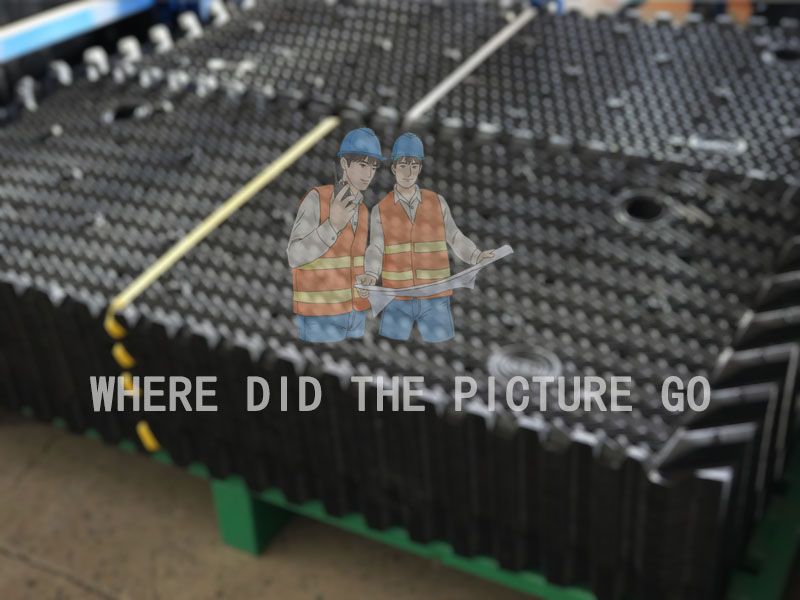
In many industrial cooling systems, performance decline happens gradually and is often misdiagnosed. Operators tend to adjust pumps or increase airflow, but the actual limitation is frequently the Cooling tower fill.
From field experience in Southeast Asia and high-temperature regions, inefficient cooling fill is one of the most common hidden causes of energy loss. When the fill is not matched to water quality or temperature, the entire system becomes unstable.
Cooling tower fill is the structured medium inside the tower that enhances heat exchange between water and air. It is the core working component of any cooling tower.
In engineering terms, cooling tower fill media:
Different types of tower fill or cooling fill directly influence cooling capacity and system reliability.
Film fill cooling tower designs use tightly spaced sheets to form continuous water films.
Best applied in clean water systems with stable operating conditions.
Splash fill cooling tower systems distribute water through repeated droplet formation.
Corrugated fill uses angled channels to improve both airflow and water spread.
PVC cooling tower fill is commonly used in standard industrial systems.
Widely used in PVC Cooling Tower Packing.
PP cooling tower fill is designed for harsh environments.
Used in PP Cooling Tower Fill Media for demanding industrial conditions.
Cooling tower fill efficiency is influenced by multiple factors beyond structure:
In a chemical plant project, upgrading Cooling Tower Packing resulted in a 17** increase in cooling performance. At the same time, airflow resistance was reduced, lowering energy consumption.
Incorrect cooling tower fill design can create airflow bypass zones, reducing effective heat exchange area.
Selection should always be based on actual working conditions rather than standard specifications.
General guidelines:
Many industries now use China Cooling Tower Filler for reliable supply and cost efficiency.
Cooling tower fill clogged issues are especially common in tropical environments.
Mineral deposits reduce heat transfer efficiency and block airflow passages.
Long-term exposure to heat and chemicals weakens the structure of cooling tower fill material.
Routine maintenance is essential for stable performance:
Regular maintenance prevents unexpected shutdowns and efficiency loss.
A food processing plant in Indonesia experienced declining efficiency due to organic contamination.
Solution:
Result:
A refinery in Saudi Arabia operated at elevated water temperatures.
Solution:
Result:
A steel plant in Vietnam faced severe clogging due to suspended solids.
Solution:
Result:
Cooling tower fill is a key factor in achieving stable and efficient cooling system performance.
With proper cooling tower fill media selection, you can:
Selecting the right design and material is essential for long-term operation.
Explore more options:Cooling Tower Packing |Cooling Tower Packing Filll |China Cooling Tower Infill
It increases the contact area between air and water to improve heat exchange efficiency.
Due to biological growth, dust, and contaminants in the circulating water.
PP cooling tower fill is recommended for high-temperature applications.
Depending on conditions, typically every 3–5 years.
Yes, cooling tower fill design directly impacts airflow and efficiency.
The author is an experienced cooling tower engineer with more than 10 years of hands-on expertise in industrial cooling systems across Asia and the Middle East. The content is based on real operational cases.
Recommended references:
Leave a comment
All fields marked with an asterisk (*) are required