About Us
We are professional cooling tower fills manufacturer, which can supply wide ranges of cooling tower fills with PVC, PP or CPVC materials.

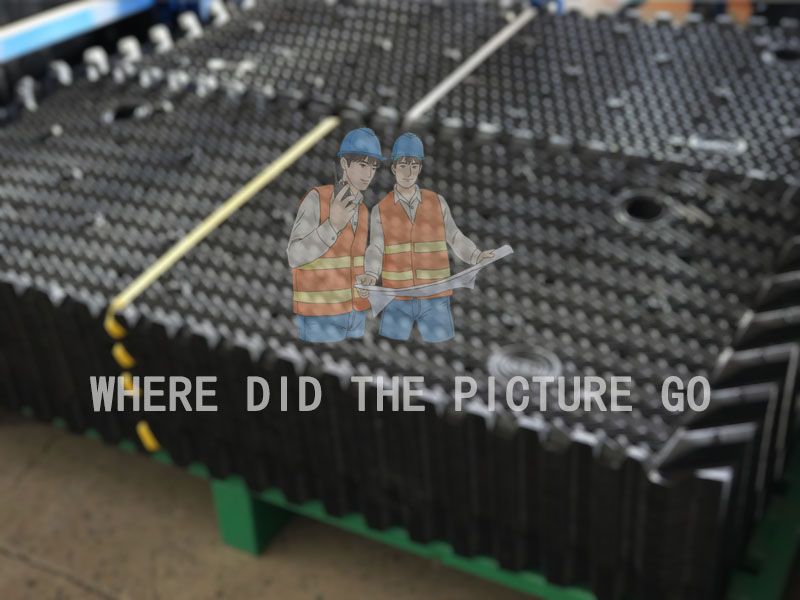
Most cooling tower performance problems do not appear overnight. They build up slowly through fouling, aging, and poor water quality management. In real industrial plants, I rarely see “sudden failure”—what I usually see is gradual loss of efficiency caused by the cooling tower fill.
Many engineers searching for a reliable Cooling tower fill solution are actually dealing with long-term degradation that was not addressed early. This is especially common in Southeast Asia’s humid environments and the Middle East’s high-temperature operations.
Cooling tower fill is the internal heat exchange structure that allows water and air to interact efficiently. Without it, a cooling tower is just an empty shell with airflow but no effective heat transfer process.
In real engineering practice, cooling tower fill media controls three critical behaviors:
This is why tower fill condition directly defines system performance.
Film fill cooling tower systems rely on structured sheets that spread water into a thin layer.
Splash fill cooling tower designs use impact layers to break water into droplets.
Corrugated fill is widely used in industrial systems due to its balanced structure and durability.
PVC Cooling Tower Packing is widely used for general industrial cooling systems.
PP Cooling Tower Fill Media is designed for demanding industrial environments.
In cooling system optimization, I rarely see cases where fan upgrades alone solve performance issues. The real bottleneck is almost always inside the cooling fill.
Field data from multiple refinery and power plant projects shows that upgrading Cooling Tower Packing can improve efficiency by 12** to 22** without changing any mechanical equipment.
Main performance drivers include:
Selection should always follow real operating conditions, not catalogue specifications.
If the system frequently suffers from cooling tower fill clogged issues, switching the fill structure is often more effective than repeated chemical cleaning.
Many procurement teams consider China Cooling Tower Filler due to supply stability, but engineering suitability must always come first.
Cooling tower fill clogged problems are extremely common in humid and dusty environments. Biological growth and suspended solids are the main causes.
Hard water leads to mineral deposits that gradually block airflow channels and reduce heat exchange efficiency.
Over time, UV exposure, heat stress, and chemical corrosion weaken the cooling tower fill material, leading to cracking and deformation.
Proper maintenance strategy can significantly extend system life and improve stability.
In many cases, poor maintenance planning leads to unnecessary cooling tower fill replacement within a short cycle.
A paper processing facility in Indonesia experienced severe efficiency drop due to biofouling inside film fill systems.
Solution: replaced with splash fill cooling tower configuration.
Result: stable airflow and reduced cleaning frequency.
A petrochemical facility in Saudi Arabia faced deformation issues due to extreme water temperature conditions.
Solution: upgraded to Cooling Tower Packing Filll using PP material.
Result: system stability improved under continuous high heat load.
A steel manufacturing plant in Vietnam used recycled water with high suspended solids.
Solution: installed corrugated fill with wider flow passages.
Result: clogging reduced significantly and maintenance intervals extended.
Cooling tower fill is not just a consumable part. It is the core of heat exchange performance in industrial cooling systems.
With proper selection and maintenance, cooling tower fill media can:
For long-term operation, engineering selection is always more important than initial procurement cost.
Main reasons are clogging, scaling, and aging of cooling tower fill.
Typically between 3 to 8 years depending on operating conditions.
Splash fill cooling tower systems perform best in contaminated water environments.
Cleaning helps temporarily, but heavily aged fill must be replaced.
Yes, airflow resistance directly impacts fan power usage.
This article is written from the perspective of an industrial cooling engineer with over 10 years of field experience across Southeast Asia, the Middle East, and East Asia. The insights are based on real project data and operational troubleshooting cases, referencing ASHRAE and Cooling Technology Institute (CTI) standards.
Leave a comment
All fields marked with an asterisk (*) are required