About Us
We are professional cooling tower fills manufacturer, which can supply wide ranges of cooling tower fills with PVC, PP or CPVC materials.

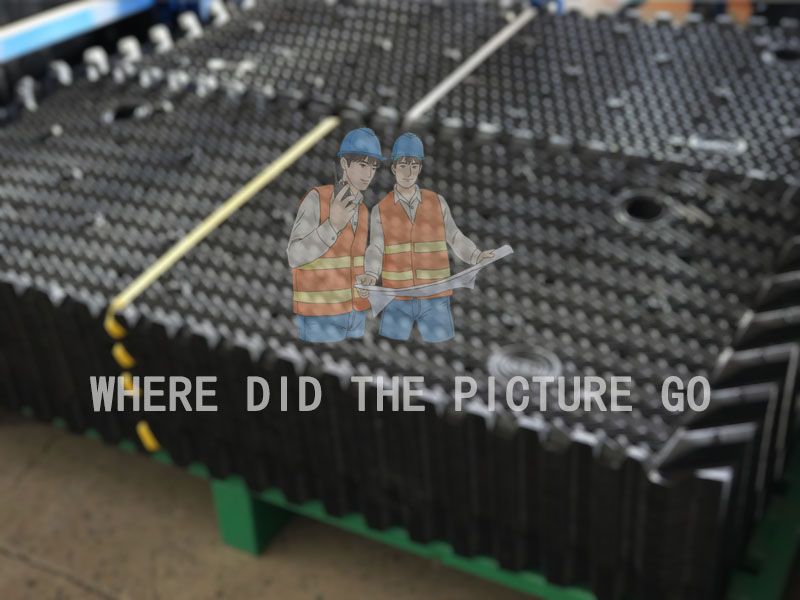
In most industrial cooling systems, performance loss is not caused by a sudden breakdown. It is a slow degradation process that often goes unnoticed until production efficiency drops or energy costs increase. In my field work across Southeast Asia and Middle Eastern plants, the root cause is very often the cooling tower fill.
When operators start searching for a replacement Cooling tower fill, it usually means the system has already lost a significant portion of its original cooling capacity. At that stage, cleaning alone is rarely enough.
Cooling tower fill is the structured internal medium that enables heat exchange between water and air inside the cooling tower. Without it, water would simply fall through the tower without effective cooling.
From an engineering point of view, cooling tower fill media influences three critical parameters:
This is why even small damage or fouling in tower fill can significantly reduce overall system efficiency.
Film fill cooling tower systems use thin structured sheets to spread water into a continuous film layer.
Splash fill cooling tower designs break water into droplets using repeated impact surfaces.
Corrugated fill is widely used in industrial systems due to its balanced performance between efficiency and durability.
PVC Cooling Tower Packing is commonly used in standard cooling systems due to its cost-effectiveness and stable thermal performance.
PP Cooling Tower Fill Media is designed for demanding industrial environments with high temperature or chemical exposure.
In real industrial troubleshooting cases, replacing cooling tower fill often delivers better results than upgrading mechanical equipment such as fans or pumps.
Field data shows that upgrading Cooling Tower Packing can improve cooling efficiency by 13**–26**, depending on system condition and water quality.
Main factors affecting performance include:
Selection should always be based on real operating conditions instead of catalog specifications or price alone.
If a system frequently experiences cooling tower fill clogged issues, structural redesign is usually more effective than repeated cleaning cycles.
Many international buyers source China Cooling Tower Filler for cost efficiency, but engineering compatibility must always be validated first.
Cooling tower fill clogged issues are common in humid environments where biological growth and suspended solids accumulate quickly.
Hard water leads to mineral deposits that reduce effective heat transfer area and restrict airflow channels.
Long-term exposure to UV radiation, heat, and chemicals causes embrittlement and structural deformation of the fill material.
Proper maintenance strategy directly affects cooling system lifespan and stability.
In many real cases, lack of maintenance leads to premature cooling tower fill replacement within a shorter lifecycle than expected.
A chemical processing facility in Thailand experienced unstable cooling performance due to severe biofouling in film fill structures.
Solution: replaced with splash fill cooling tower configuration.
Result: improved airflow stability and reduced cleaning frequency significantly.
A refinery in Oman faced continuous deformation issues due to high operating temperatures exceeding PVC limits.
Solution: upgraded to Cooling Tower Packing Filll using PP material.
Result: stable long-term performance under high thermal load.
A mining operation in Indonesia used high-solid-content recycled water, causing frequent clogging in narrow-channel fill systems.
Solution: installed corrugated fill with optimized flow paths.
Result: reduced blockage frequency and improved operational reliability.
Cooling tower fill is not just a consumable part—it is the core element that determines heat exchange efficiency in industrial cooling systems.
With proper selection and maintenance, cooling tower fill media can:
For long-term operation, engineering judgment and real operating conditions should always take priority over initial procurement cost.
Most cases are caused by fouling, scaling, and aging of cooling tower fill.
Typically 3–8 years depending on water quality and operating conditions.
Splash fill cooling tower systems are most suitable due to anti-clogging performance.
Cleaning improves performance temporarily, but degraded fill must eventually be replaced.
Yes, airflow resistance directly impacts fan energy usage and system efficiency.
This article is written by an industrial cooling engineer with over 10 years of field experience across Southeast Asia, the Middle East, and East Asia. All insights are based on real troubleshooting cases and system optimization projects, referencing ASHRAE and Cooling Technology Institute (CTI) standards.
Leave a comment
All fields marked with an asterisk (*) are required