About Us
We are professional cooling tower fills manufacturer, which can supply wide ranges of cooling tower fills with PVC, PP or CPVC materials.

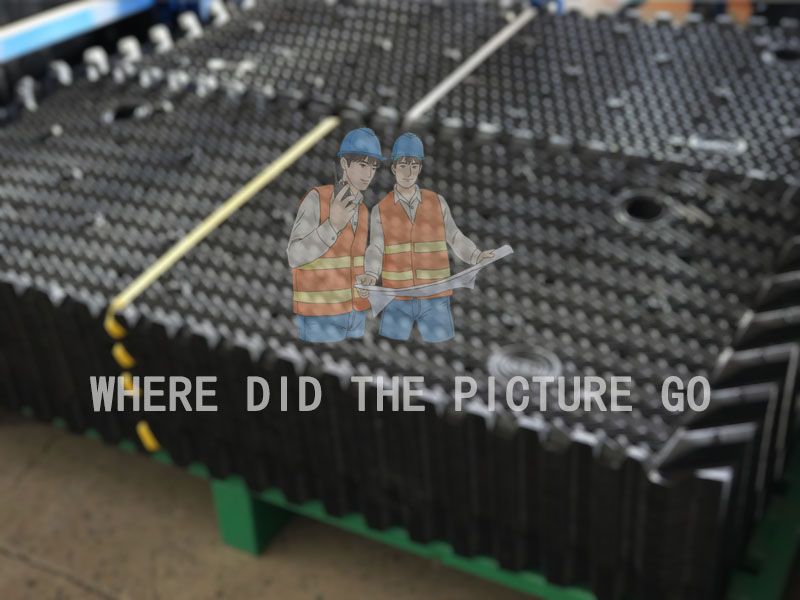
When a cooling tower cannot achieve the expected cooling temperature, many operators first check the fan, motor, pump, or water circulation system. However, one of the most important components inside the tower is often overlooked: the fill media.
The main purpose of cooling tower fill is to increase the contact area between water and air. This allows heat to transfer more effectively through evaporation.
If the fill design is not suitable, damaged, or seriously blocked, the cooling tower may lose efficiency even when other components are working normally.
For many industrial users, improving cooling performance does not always mean replacing the entire cooling tower. In many cases, selecting the right cooling tower packing and improving internal components can provide a practical solution.
This article explains how fill media affects cooling performance and what engineers should consider when upgrading or maintaining a cooling tower system.
A cooling tower works by using air movement and water evaporation to remove heat from circulating water.
The fill area is where most of this heat exchange process happens.
The basic process is:
The larger the effective contact area between air and water, the better the cooling performance can be.
This is why the design and condition of cooling tower fill media are so important.
The most important function of cooling tower fill is creating a large surface area for heat exchange.
Without proper fill, water would fall directly through the tower with limited contact time with air.
A well-designed fill structure spreads water into a thin layer, allowing more heat to be removed during the cooling process.
Uniform water distribution is essential for stable cooling performance.
If some areas of the fill receive too much water while other areas remain dry, the cooling tower cannot operate efficiently.
Good cooling fill design helps distribute water more evenly across the entire fill area.
Cooling performance depends on both water flow and air movement.
A suitable fill structure allows enough airflow to pass through while maintaining effective water contact.
If the fill creates excessive resistance, the fan system may consume more energy while providing less cooling effect.
Different cooling tower applications require different fill solutions. Choosing the right product requires understanding the actual operating environment.
Film Fill is one of the most commonly used solutions in modern cooling towers.
The surface design creates a thin water film that increases the contact area between water and air.
Film Fill is commonly used in:
For applications with good water treatment conditions, Film Fill can provide efficient heat transfer performance with a compact structure.
Water quality has a direct impact on cooling tower fill performance.
If circulating water contains high levels of minerals, dust, or suspended solids, the fill surface may become blocked over time.
Before selecting cooling tower fill media, engineers should evaluate:
The right fill design should match the actual water condition.
Cooling tower fill materials are exposed to water, air, temperature changes, and chemicals for long periods.
Over time, the fill may become brittle, deformed, or damaged.
Aging fill can reduce the effective heat exchange area and lower overall cooling performance.
Scale and biological growth are common problems in cooling tower systems.
When deposits accumulate inside the fill passages, airflow becomes restricted and water cannot spread properly.
Regular inspection and water treatment can help reduce this problem.
Using the wrong fill type can affect cooling efficiency.
For example, a fill designed for clean HVAC water may not perform well in an industrial environment with higher contamination levels.
The correct cooling tower packing should always be selected based on application requirements.
One of the most effective methods to restore cooling performance is replacing old fill.
During replacement, engineers should check:
A properly installed new fill system can help improve heat exchange performance.
Even high quality fill cannot perform well without proper water distribution.
Blocked nozzles or uneven water flow can reduce the effectiveness of the entire cooling tower.
During maintenance, water distribution components should also be inspected.
Airflow is another important factor affecting cooling tower operation.
The Air intake grille helps control air entering the cooling tower and supports stable airflow conditions.
A damaged or blocked air intake system may reduce the performance of the fill area.
Efficient water management is becoming increasingly important for industrial cooling systems.
The Water Collector helps reduce water droplets leaving the tower with discharged air.
Improving water recovery can help reduce operating costs and support more sustainable cooling system operation.
PVC is widely used in cooling tower fill production because of its stable performance and suitability for many applications.
It is commonly selected for:
PP material provides good temperature resistance and chemical stability.
It can be considered for applications where operating conditions are more demanding.
The choice between PVC and PP depends on actual project requirements.
Cooling tower efficiency is closely related to energy consumption.
When a cooling tower performs poorly, the system may need longer operating time or additional energy to maintain the required temperature.
A suitable fill design helps improve heat transfer efficiency and supports more stable operation.
For large industrial systems, even small improvements in cooling performance can have a meaningful impact over long operating periods.
Different regions have different cooling challenges.
In Southeast Asia, cooling towers often operate under high temperature and humidity conditions.
Factories and commercial buildings require cooling systems that can run reliably for long periods.
In Middle Eastern countries, high ambient temperatures create additional pressure on cooling systems.
Material durability and stable performance are important considerations when selecting fill solutions.
Japan and South Korea have strict requirements for industrial equipment reliability.
Cooling tower systems used in electronics, manufacturing, and technology industries require stable and precise temperature control.
Cooling tower fill is one of the key components that determines heat transfer performance. A suitable fill design can improve water distribution, increase air and water contact, and support stable cooling operation.
For cooling tower owners and engineers, improving performance starts with understanding the actual working conditions, including water quality, temperature, airflow, and maintenance requirements.
Whether upgrading an existing system or selecting components for a new project, choosing the right cooling fill solution is an important step toward achieving reliable and efficient cooling performance.
A complete cooling solution should consider not only the fill media itself but also airflow management, water recovery, and long-term maintenance needs.
Leave a comment
All fields marked with an asterisk (*) are required