About Us
We are professional cooling tower fills manufacturer, which can supply wide ranges of cooling tower fills with PVC, PP or CPVC materials.

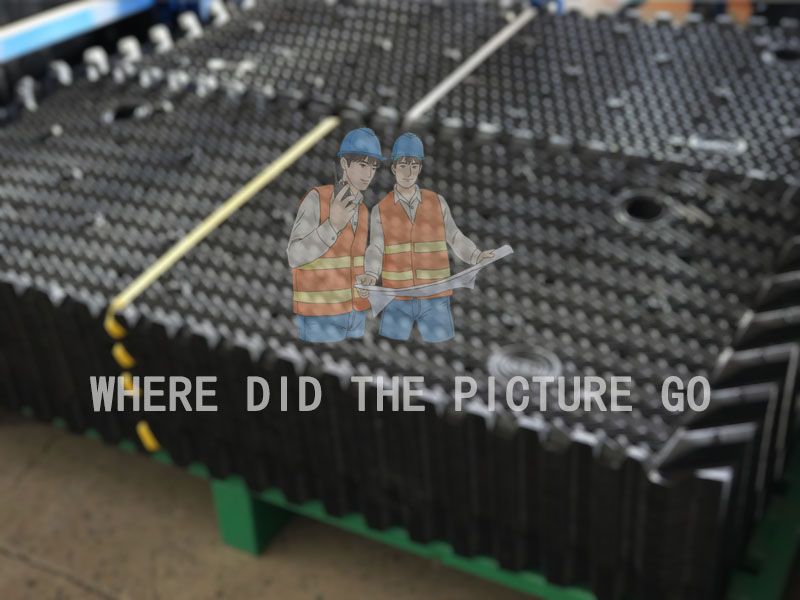
In many industrial plants, energy consumption slowly increases without any obvious equipment failure. Operators often blame pumps or fans, but in real field investigations, the real efficiency loss usually comes from inside the tower—the cooling tower fill.
When the cooling tower fill media starts degrading, the system continues running, but it quietly consumes more energy to deliver the same cooling effect.
The cooling tower packing is not a static component. It changes over time due to water chemistry, temperature cycles, and environmental exposure.
If these changes are not diagnosed early, the tower fill gradually becomes a hidden source of inefficiency.
Fans and pumps require more power to maintain the same cooling output when cooling tower fill media is partially blocked.
Outlet water temperature slowly increases even under normal load conditions.
Some areas of the system perform worse due to blockage in cooling fill.
Airflow resistance through cooling tower packing filll becomes higher than design conditions.
Scaling and biological growth often start from poor chemical balance.
Restricted airflow is a strong indicator of internal blockage.
Visual inspection reveals deformation or fouling in cooling tower fills material.
Comparing current performance with original design data helps identify degradation trends.
Deposits reduce effective heat transfer area of cooling tower fill media.
Water bypasses parts of the cooling tower packing, reducing contact efficiency.
Blockage forces fans to consume more energy.
Reduced evaporation efficiency leads to higher outlet temperatures.
Low-pressure cleaning removes partial fouling without damaging structure.
Improving water chemistry reduces future scaling inside cooling tower fill media.
Damaged zones of cooling fill can be replaced instead of full system shutdown.
If repeated cleaning does not restore performance, structural degradation has likely occurred. At this stage, working with a reliable cooling tower fill replacement supplier becomes necessary.
Many industrial operators rely on china cooling tower filler manufacturers for stable supply and cost efficiency. In larger system upgrades, china cooling tower infill solutions are often used to restore full efficiency.
PVC Cooling Tower Packing is suitable for stable environments with controlled water quality.
PP Cooling Tower Fill Media performs better in high temperature and chemically aggressive conditions.
Gradual biological fouling caused unnoticed efficiency loss in cooling tower fill media, increasing energy consumption by over time.
Dust accumulation led to airflow restriction and uneven performance across cooling tower packing.
Thermal aging caused structural deformation of cooling tower fills material, reducing cooling consistency.
Effective diagnosis of the cooling tower fill is essential for maintaining industrial energy efficiency. Many performance issues are hidden and only become visible through careful analysis.
Early detection and timely intervention can significantly reduce operational costs and extend system life.
Gradual increase in energy consumption and temperature drift.
Only if structural damage has not occurred.
Biofouling, scaling, and airflow restriction are the main causes.
Regular monitoring during maintenance cycles is recommended.
Yes, different materials respond differently to cleaning and stress.
This article is based on industrial troubleshooting experience focused on energy efficiency improvement and cooling system performance diagnostics.
Leave a comment
All fields marked with an asterisk (*) are required