About Us
We are professional cooling tower fills manufacturer, which can supply wide ranges of cooling tower fills with PVC, PP or CPVC materials.

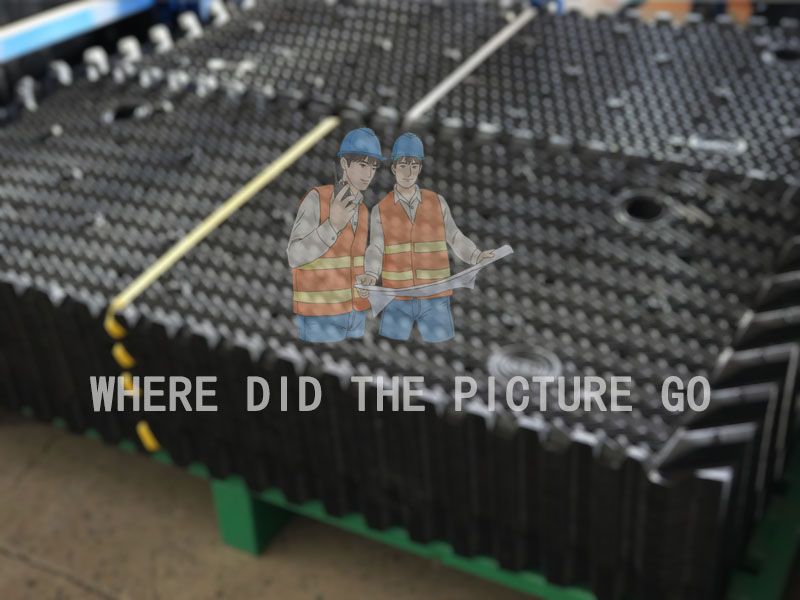
When a cooling tower suddenly fails to meet temperature targets, most teams start checking mechanical components. But in real projects, the issue often comes from the cooling tower fill. Once the cooling tower fill media starts to degrade, clog, or mismatch the operating condition, system performance drops quickly.
Across Southeast Asia, the Middle East, and Japan, challenging climates and water conditions make cooling fill selection and maintenance even more critical. Ignoring early warning signs can lead to higher energy costs and unexpected shutdowns.
Cooling tower fill is the component that enables efficient heat exchange by increasing the contact surface between water and air. It converts flowing water into thin films or droplets, improving evaporation and cooling efficiency.
From a system perspective, tower fill is the core of thermal performance. Without it, cooling capacity is significantly reduced.
Film fill cooling tower systems distribute water into thin layers across structured sheets, maximizing heat transfer.
Splash fill cooling tower uses bars or grids to break water into droplets, making it more resistant to contamination.
Corrugated fill provides structured channels for water flow, offering balanced performance between efficiency and durability.
PVC Cooling Tower Packing is widely used due to its cost advantage and ease of installation.
PP Cooling Tower Fill Media offers higher resistance to temperature and chemical exposure.
The condition of cooling tower fill has a direct impact on system output. Efficient cooling tower fill design ensures proper airflow and uniform water distribution.
From field observations, improving cooling tower fill efficiency can reduce outlet temperature by 2–3°C and stabilize process conditions.
Key influencing factors:
Choosing the right cooling tower fill media requires evaluating real system conditions rather than relying on standard configurations.
Other considerations include operating temperature, maintenance capability, and expected lifespan.
Internal product references:
Cooling tower fill clogged is typically caused by dirt, algae, or suspended solids. It restricts airflow and reduces cooling efficiency.
Mineral buildup on cooling tower fill material reduces effective heat transfer area, especially in hard water regions.
Long-term exposure to heat and chemicals leads to brittleness and deformation, requiring cooling tower fill replacement.
Severe biological fouling caused repeated cooling tower fill clogged conditions. Switching to splash fill reduced downtime and improved operational stability.
Standard PVC fill deformed under continuous high heat. Upgrading to pp cooling tower fill significantly extended service life and reduced maintenance frequency.
A plant using treated wastewater experienced scaling issues. Installing cooling tower fill for dirty water improved system reliability and reduced cleaning intervals.
The performance of cooling tower fill directly determines the efficiency and reliability of the entire cooling system. Proper selection, regular maintenance, and timely replacement are essential for maintaining stable operation in challenging industrial environments.
Clogging, scaling, or aging of the fill are the most common causes.
Improve water treatment and select suitable fill type for the water condition.
When efficiency drops significantly or physical damage is observed.
It depends on water quality, but splash and corrugated fills are widely used in industrial systems.
Yes, improved airflow and heat transfer reduce fan and pump energy consumption.
This article is based on more than 10 years of practical experience in industrial cooling tower systems. The insights come from real project troubleshooting and optimization across Southeast Asia and the Middle East, following ASHRAE and Cooling Technology Institute CTI guidelines.
Leave a comment
All fields marked with an asterisk (*) are required