About Us
We are professional cooling tower fills manufacturer, which can supply wide ranges of cooling tower fills with PVC, PP or CPVC materials.

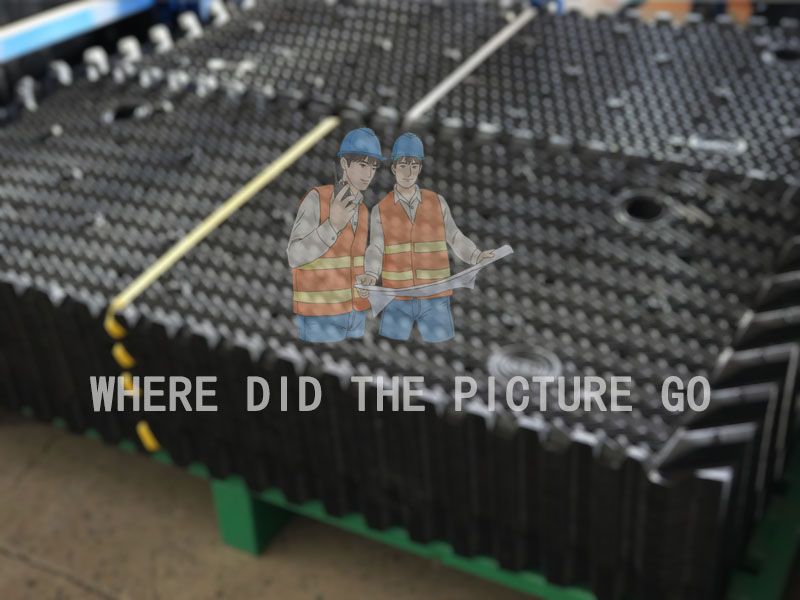
In many cooling tower projects, operators usually pay attention to the fan, motor, pump, and water circulation system. However, the internal fill media is often overlooked because it is hidden inside the tower structure.
After years of operation, the performance of a cooling tower may gradually decrease due to aging, scaling, clogging, or physical damage of the fill material. In many cases, replacing the old fill can help restore cooling performance without replacing the complete cooling tower.
Cooling tower fill is a key component responsible for increasing the contact area between water and air. When the fill condition declines, the heat transfer process can become less effective.
For maintenance engineers and cooling tower operators, understanding when and how to replace cooling tower packing is important for keeping the system running smoothly.
Cooling tower fill replacement means removing old or damaged fill media and installing new fill blocks inside the cooling tower.
The replacement process is commonly carried out during regular maintenance periods or when the cooling tower cannot achieve the expected cooling temperature.
A typical replacement project includes:
A successful replacement project requires not only choosing new fill material but also understanding why the original fill failed.
Cooling tower fill usually does not fail suddenly. In most cases, there are warning signs before replacement becomes necessary.
One of the most common signs is that the cooling tower cannot reduce water temperature as effectively as before.
If the fan and pump are operating normally but the outlet water temperature continues increasing, the condition of the fill should be checked.
Over time, fill sheets may become brittle, distorted, or partially broken due to temperature changes, chemicals, or mechanical stress.
Damaged fill cannot maintain proper water distribution and may create areas with poor heat exchange.
Dust, minerals, algae, and other particles can accumulate inside the fill structure.
When passages become blocked, airflow resistance increases and water cannot spread evenly across the fill surface.
A healthy cooling tower should distribute water evenly across the fill area.
If some sections are dry while others have excessive water flow, the fill system or water distribution system may require inspection.
Understanding the causes of fill failure helps prevent the same problem from happening again after replacement.
Water quality is one of the biggest factors affecting fill life.
High levels of minerals, suspended solids, and biological growth can create deposits on the fill surface.
Over time, these deposits reduce the effective contact area between water and air.
Not every cooling tower requires the same type of fill.
For example, high efficiency Film Fill is commonly used in applications with good water treatment, while some industrial environments may require different structures with better resistance to contamination.
Choosing unsuitable cooling tower packing may lead to frequent cleaning or early replacement.
Even high quality fill materials have a service life.
Continuous exposure to water, airflow, temperature changes, and chemicals will gradually affect the material properties.
Replacing old fill is not simply buying new sheets and putting them into the tower. The replacement fill should match the original cooling tower design and current operating conditions.
Before ordering replacement fill, engineers should check:
Incorrect dimensions may affect airflow and water distribution.
The most common materials used for cooling tower fill production are PVC and PP.
PVC fill is widely used in commercial and industrial cooling applications.
It offers balanced performance and is suitable for many standard operating conditions.
PP material provides good temperature resistance and chemical stability.
It is often considered for applications with higher operating temperatures or special environmental requirements.
Before selecting replacement cooling tower fill media, it is important to understand:
A proper replacement process helps ensure the new fill performs correctly.
The first step is checking the current condition of the tower.
Engineers normally inspect:
Old fill blocks should be removed carefully to avoid damaging the tower structure.
During this stage, it is also a good opportunity to clean internal components.
New fill blocks should be installed according to the correct direction and arrangement.
Improper installation may reduce cooling performance even when using good quality fill material.
After installation, engineers should confirm that water flows evenly and air passes through the fill properly.
Other components such as the Air intake grille should also be checked because airflow conditions directly affect fill performance.
A cooling tower is a complete system. Replacing fill is often the right time to inspect other important parts.
The air intake area controls the amount of air entering the cooling tower.
A damaged or blocked Air intake grille may reduce airflow and affect heat exchange.
The water collection section helps return cooled water efficiently and reduce water loss.
The Water Collector is an important component for improving water recovery performance.
A properly planned fill replacement project can provide several practical benefits.
The actual improvement depends on the condition of the old fill and the operating environment.
There is no fixed replacement period for every cooling tower.
The service life depends on:
Some cooling towers can operate for many years with proper maintenance, while others working in harsh environments may require earlier replacement.
Cooling tower fill replacement is one of the most practical ways to improve an aging cooling system. Instead of replacing the entire tower, upgrading the internal fill can often solve performance problems caused by aging or damaged media.
The key is choosing the correct replacement cooling tower fill media based on the actual working conditions.
By considering tower design, water quality, material selection, and installation methods, engineers can achieve more stable cooling performance and reduce future maintenance issues.
Leave a comment
All fields marked with an asterisk (*) are required