About Us
We are professional cooling tower fills manufacturer, which can supply wide ranges of cooling tower fills with PVC, PP or CPVC materials.

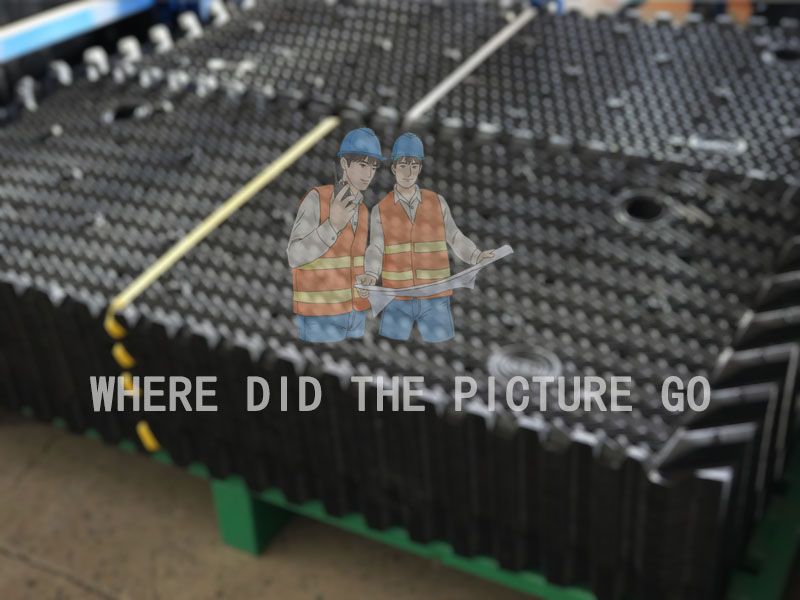
When people talk about cooling tower performance, they often focus on the fan, motor, pump, or water circulation system. However, the internal fill material is one of the most important components that directly affects heat exchange efficiency.
The main purpose of cooling tower fill is to increase the contact area between air and water. By slowing down the water flow and creating a larger surface area, the fill allows more heat to transfer from water to air.
In practical projects, engineers often need to choose between different types of cooling tower packing based on water quality, tower design, operating temperature, and maintenance requirements. Selecting the wrong type may lead to problems such as scaling, blockage, reduced cooling capacity, and frequent replacement.
This article will explain the most common types of cooling tower fill media, including Film Fill and Splash Fill, and discuss how to choose the right option for different applications.
A cooling tower is a complete system where every component works together. The fan moves air, the pump circulates water, and the fill media creates the heat transfer area.
A suitable cooling tower packing can improve the interaction between water and air. On the other hand, unsuitable fill may reduce performance even if other parts of the cooling tower are working normally.
Before choosing tower fill, engineers usually consider the following conditions:
For example, a cooling tower used in an office building usually operates with cleaner water, while an industrial plant may have more complicated water conditions. These two applications may require different fill structures.
Film fill cooling tower media is one of the most widely used solutions in modern cooling towers.
The design principle is simple. The fill sheets are manufactured with specially designed patterns. When water flows over these surfaces, it spreads into a thin film. At the same time, air passes through the openings between the sheets.
This creates a large contact area between water and air, allowing efficient heat transfer through evaporation.
Film Fill is commonly used in:
Film Fill has several characteristics that make it popular in many applications.
Because Film Fill provides a large surface area in a relatively small space, it is often selected when the project requires good thermal performance with limited tower size.
Splash Fill is another traditional type of cooling tower fill media. Unlike Film Fill, Splash Fill does not rely on forming a continuous water film.
Instead, water falls onto specially designed splash bars or grids. The impact breaks the water into smaller droplets, increasing contact with air.
Splash Fill is often considered for applications where water contains more impurities or where reducing blockage risk is important.
Typical applications include:
There is no universal answer when choosing between Film Fill and Splash Fill. The best choice depends on the actual working environment.
| Comparison | Film Fill | Splash Fill |
|---|---|---|
| Heat Transfer Efficiency | High surface contact area | Good water breakup effect |
| Water Quality Requirement | Better for cleaner water | More suitable for water with impurities |
| Maintenance | Requires proper water treatment | Generally easier in harsh conditions |
| Main Applications | HVAC and modern industrial cooling | Heavy industrial cooling systems |
Choosing the correct cooling tower fill media requires understanding the actual operating environment. Many replacement projects fail because the new fill is selected only according to price or appearance.
Different cooling tower designs require different fill arrangements.
Counter flow cooling towers normally require fill structures that support vertical water flow and upward air movement. Cross flow cooling towers usually have different installation requirements because air and water move in different directions.
Water quality has a major influence on fill selection.
If the circulating water contains high levels of minerals, dirt, or suspended particles, a fill design with larger passages may reduce blockage problems.
For clean HVAC systems, high efficiency Film Fill is commonly considered because the water condition is easier to control.
Material selection is also important. PVC and PP are two common materials used for cooling tower fill manufacturing.
PVC fill is widely used because of its balanced performance and cost efficiency. PP fill is often selected when higher temperature resistance or improved chemical resistance is required.
PVC is one of the most common materials used for cooling tower packing. It provides good forming performance and is suitable for many standard cooling applications.
PVC cooling tower fill is commonly used in:
PP material provides good temperature resistance and chemical stability. It is often considered for applications where operating conditions are more demanding.
Although fill media plays an important role, cooling tower efficiency depends on the complete system.
For example, proper airflow is necessary for effective evaporation. The Air intake grille helps control air entering the tower while reducing water splash loss.
The water collection system is also important. A suitable Water Collector helps reduce water carryover and improves water recovery efficiency.
During cooling tower maintenance or renovation projects, engineers usually check the fill, air intake section, and water collection system together.
Lower purchase cost does not always mean lower operating cost. Poor quality fill may deform faster, reduce cooling performance, and increase maintenance frequency.
A high efficiency fill design may not perform well if the water contains too many impurities. The operating environment should always be considered first.
Sometimes the fill is damaged because of other system problems, such as poor water distribution or airflow issues. Checking the complete cooling tower helps avoid repeated problems.
When replacing old cooling tower fill, the first step is to understand why the original fill failed.
Common reasons include:
A replacement project should consider the original tower design and current operating conditions. Simply installing a different type of fill without evaluation may not achieve the expected result.
Film Fill and Splash Fill are both important technologies used in cooling tower systems. The right choice depends on the balance between cooling requirements, water quality, operating environment, and maintenance conditions.
For most modern cooling tower projects, engineers carefully evaluate the complete system before selecting the suitable cooling tower fill.
A properly selected tower fill can help maintain stable operation, improve heat exchange performance, and support long-term cooling system reliability.
Leave a comment
All fields marked with an asterisk (*) are required