About Us
We are professional cooling tower fills manufacturer, which can supply wide ranges of cooling tower fills with PVC, PP or CPVC materials.

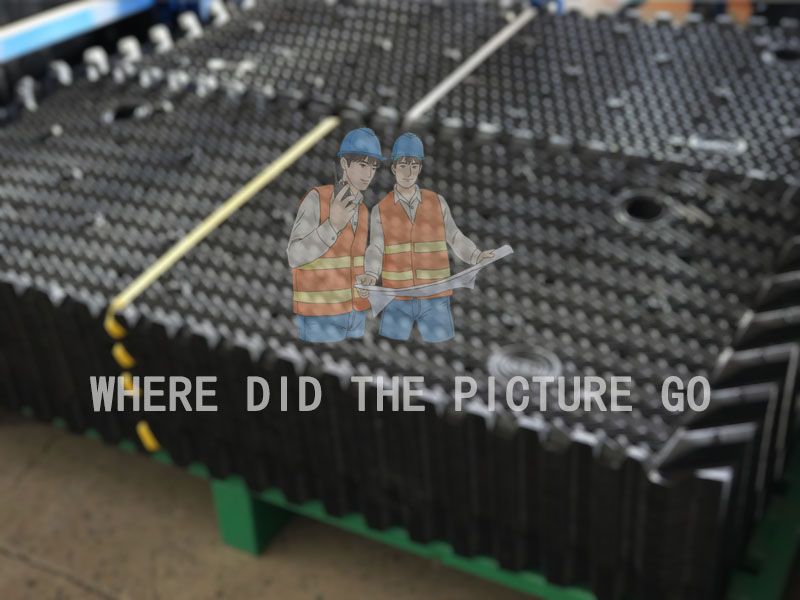
When an industrial cooling tower cannot reach the expected temperature difference, many operators first check the fan, motor, or water pump. However, after years of troubleshooting cooling systems, I have found that the real problem is often inside the tower itself, especially the cooling tower fill section.
Aging fill, incorrect structure selection, and poor water compatibility can gradually reduce heat transfer performance. The tower may still be running, but the cooling capacity is no longer the same as when it was newly installed.
For industrial users in Southeast Asia, the Middle East, Japan, and Korea, selecting the correct Cooling tower fill is an important step to maintain stable production conditions and reduce unexpected maintenance costs.
A good cooling solution is not simply about installing new material. It requires understanding the actual operating environment, water condition, and long-term maintenance requirements.
Cooling tower fill is the heat exchange component installed inside the tower. Its main purpose is to slow down water flow, increase contact area, and allow air to remove heat more effectively.
In a working cooling tower, hot water enters from the top and passes through the fill structure while air moves in the opposite direction. The interaction between air and water creates the cooling effect.
The quality of cooling tower fill media directly influences:
Many efficiency problems are actually caused by unsuitable fill design rather than equipment failure.
Different industries face different cooling challenges. A cooling tower working in a clean manufacturing plant has completely different requirements from one operating with recycled water or chemical process water.
Common challenges include:
For this reason, selecting the correct tower fill should be based on actual working conditions rather than using the same design for every project.
A film fill cooling tower uses specially designed sheets to spread water into a thin layer. This creates a large surface area for heat exchange.
This structure is widely used because of its excellent cooling performance.
Typical advantages include:
However, narrow channels require better water quality control. If particles accumulate, performance can decline quickly.
Splash fill works by breaking water droplets through repeated impact. This creates air-water contact without relying on narrow channels.
It is often selected for:
For cooling tower fill for dirty water applications, splash structures often provide better reliability.
Corrugated fill combines structured airflow passages with efficient water distribution.
The angled design improves contact between air and water while maintaining reasonable resistance to fouling.
Many retrofit projects choose corrugated designs because they provide a practical balance between efficiency and service life.
PVC remains a popular choice because it provides reliable performance at a reasonable cost.
PVC Cooling Tower Packing is commonly used in standard industrial cooling applications.
PVC material features:
For systems exposed to extreme heat, engineers usually evaluate whether a higher resistance material is needed.
PP material is preferred for more demanding environments.
PP Cooling Tower Fill Media provides better resistance against temperature and chemical influence.
It is commonly applied in:
Cooling tower fill efficiency depends on several combined factors. A high-performance fill product cannot work properly if the operating environment is unsuitable.
Important factors include:
In a retrofit project for an Asian manufacturing plant, replacing damaged fill improved outlet water temperature control by approximately 15** without changing the existing fan system.
This shows why fill inspection should be part of regular cooling tower maintenance planning.
Choosing a supplier is not only about comparing prices. Industrial buyers should evaluate technical experience, production capability, and product adaptability.
A professional cooling tower fill supplier should understand:
Many international customers searching for a cooling tower filler factory are looking for stable supply and engineering support at the same time.
A manufacturer with experience in different markets can usually provide better recommendations for specific applications.
Cooling tower fill clogged problems usually happen when dirt, algae, or suspended particles block the air passages.
The result is:
Mineral deposits gradually cover the fill surface and reduce the effective heat exchange area.
This problem is common in regions with hard water conditions.
After years of operation, repeated thermal cycling and chemical exposure can weaken the structure.
Aged fill may become brittle, distorted, or partially collapsed.
A food processing factory in Indonesia reported unstable cooling during high production seasons.
Inspection found that the original fill had severe biological contamination after long-term operation.
The solution was upgrading the internal fill structure and improving water management.
The plant achieved more stable cooling performance and reduced unexpected shutdown risks.
A chemical processing facility in Saudi Arabia experienced repeated fill deformation under continuous high-temperature operation.
The original material was replaced with a PP-based solution suitable for higher thermal conditions.
The cooling tower achieved better structural stability during summer operation.
A wastewater treatment facility in Vietnam needed a cooling solution that could handle suspended solids.
Traditional film structures caused frequent blockage problems.
After changing to a more open structure, maintenance requirements were reduced significantly.
Waiting until complete failure is usually the most expensive option. Experienced engineers normally recommend checking fill condition before efficiency drops severely.
Replacement planning should consider:
Products such as Cooling Tower Packing Fill and China Cooling Tower Infill are commonly selected for industrial replacement projects.
The cooling tower fill section is one of the most important parts of any cooling system. Correct selection, proper maintenance, and timely replacement can significantly improve operational reliability.
For industrial customers, the best solution is not always the cheapest option. The right choice depends on water conditions, temperature, tower design, and long-term operation goals.
A well-designed fill system provides the foundation for stable cooling performance.
It increases air-water contact area and improves heat transfer inside the cooling tower.
Splash fill is usually preferred because it provides stronger resistance to blockage.
Correct selection, proper water treatment, and regular maintenance are the key factors.
Replacement is recommended when fill becomes damaged, severely blocked, or unable to maintain cooling performance.
Many industrial buyers choose Chinese manufacturers because of production capacity, customization options, and supply stability.
This article is prepared from the viewpoint of an industrial cooling engineer with more than 10 years of practical experience in cooling tower design, replacement projects, and system optimization. The content is based on real applications across Southeast Asia, the Middle East, Japan, and Korea, with technical references including ASHRAE and Cooling Technology Institute (CTI).
Leave a comment
All fields marked with an asterisk (*) are required