About Us
We are professional cooling tower fills manufacturer, which can supply wide ranges of cooling tower fills with PVC, PP or CPVC materials.

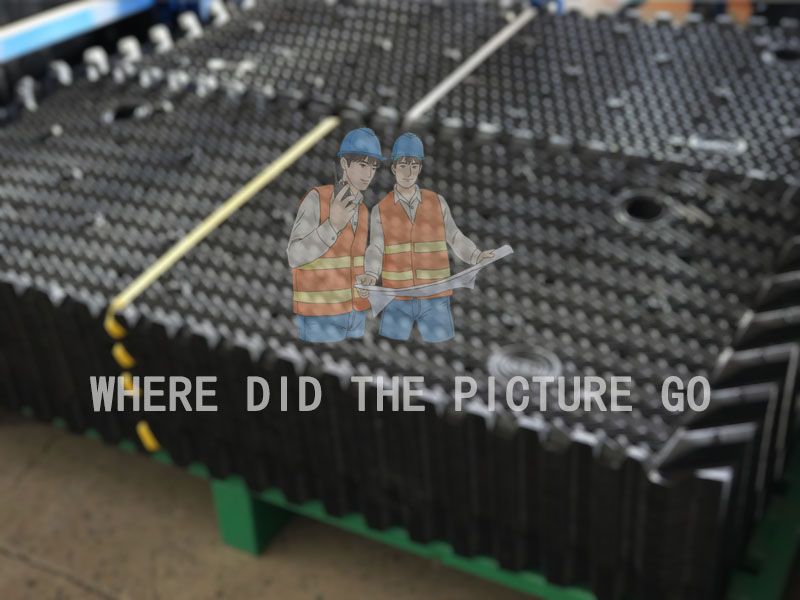
If you have ever worked with a cooling tower, you probably know that the fill media inside the tower is one of the parts that has a direct impact on cooling performance. Many people focus on the fan, motor, or water pump when checking a cooling tower, but the condition and design of the fill are equally important.
Simply speaking, cooling tower fill is the material installed inside a cooling tower to increase the contact area between water and air. When hot water flows through the fill, it spreads into thin layers or small droplets. At the same time, air passes through the fill area. This contact allows part of the water to evaporate and removes heat from the system.
In my experience working with cooling tower projects, many cooling problems are not caused by the cooling tower design itself. A large number of efficiency issues come from old, damaged, blocked, or incorrectly selected fill media. Choosing the right tower fill can make a big difference in daily operation.
The working principle of a cooling tower is based on heat exchange between water and air. The purpose of the fill is to slow down the water flow and create a larger surface area for evaporation.
Without proper fill material, water would quickly fall from the top of the tower to the basin, and the contact time with air would be too short. The cooling effect would be limited.
A good cooling tower fill media helps achieve three important functions:
Different cooling tower applications require different fill designs. For example, a clean water HVAC cooling tower may use a high efficiency film fill design, while an industrial cooling tower with higher contamination levels may require a different structure that reduces clogging risks.
There are several types of cooling tower packing used in modern cooling systems. The selection usually depends on water quality, operating temperature, cooling requirements, and tower structure.
Film fill cooling tower is one of the most commonly used designs in modern cooling towers. The surface of the fill is designed with special patterns that allow water to form a thin film while flowing downward.
This design creates a large contact area between water and air, making it suitable for applications that require good heat transfer performance.
Film Fill is commonly used in:
When selecting Film Fill, engineers usually check several factors including material thickness, flute design, spacing, and water distribution conditions.
Splash fill works differently from film fill. Instead of creating a continuous water film, splash fill breaks water into smaller droplets through repeated impact.
It is often selected for applications where water contains more suspended particles or where reducing blockage is an important consideration.
The right choice between film fill and splash fill depends on the actual working environment. There is no single fill type suitable for every cooling tower.
Many cooling tower operators only check the external parts of the equipment. However, the internal cooling tower packing should also be inspected regularly.
Over time, fill media may experience:
When the packing becomes blocked or damaged, water distribution becomes uneven. Some areas may receive too much water while other areas receive too little. This reduces heat transfer efficiency and increases operating costs.
A simple inspection schedule can help identify problems early. During maintenance, engineers usually check whether the fill blocks are clean, whether the structure remains stable, and whether the airflow path is affected.
Choosing the correct tower fill is not only about selecting a product size from a catalog. A suitable solution needs to match the actual operating conditions.
Water quality is one of the most important factors. If the circulating water contains high levels of minerals, dust, or other particles, a fill design with larger passages may be more suitable.
Different materials have different temperature resistance. PVC fill is widely used in many standard cooling tower applications, while PP materials are often considered for applications requiring higher temperature resistance or stronger chemical resistance.
Cross flow cooling towers and counter flow cooling towers normally use different fill arrangements. The size, height, and installation method of the fill should match the tower structure.
Air distribution directly affects cooling performance. Components such as the Air intake grille also play an important role in maintaining proper airflow into the tower.
A well-designed air path helps the fill media perform better because sufficient air needs to pass through the water surface.
The term cooling fill is often used when discussing the internal heat exchange materials of a cooling tower. Although the fill is only one component, it has a strong influence on the overall cooling result.
A properly selected cooling fill can help:
However, cooling tower performance is affected by many factors together, including fan operation, water flow rate, air temperature, humidity, and maintenance conditions. The fill should always be considered as part of the complete cooling system.
Besides the fill media, several other components also influence cooling tower operation.
The air intake section controls how outside air enters the cooling tower. A suitable Air intake grille helps reduce water splash loss while maintaining airflow.
After the cooling process, cooled water needs to be collected efficiently. A properly designed Water Collector helps reduce water carryover and improves water recovery.
When replacing cooling tower parts, it is usually better to check the entire system instead of replacing only one component. The fill, airflow system, and water collection system work together.
The service life of cooling tower fill depends on operating conditions. In clean water applications, fill may work for many years. In harsh industrial environments, inspection and replacement may be needed more frequently.
Yes. Many cooling towers do not need complete replacement when performance decreases. Replacing old fill media is often a practical maintenance solution.
Common signs include reduced cooling capacity, increased operating temperature, damaged sheets, blocked passages, and uneven water distribution.
In real cooling tower projects, the fill media is often underestimated because it is hidden inside the tower. But this simple-looking component has a major influence on heat transfer performance.
Whether you are maintaining an existing cooling tower or preparing a new project, selecting the correct cooling tower fill based on actual operating conditions is always a good starting point.
A suitable tower fill design, proper installation, and regular inspection can help maintain stable cooling performance and reduce unexpected maintenance problems.
For cooling tower replacement projects, engineers usually evaluate the complete system, including fill media, airflow components, and water collection parts, to achieve the best overall result.
Leave a comment
All fields marked with an asterisk (*) are required