About Us
We are professional cooling tower fills manufacturer, which can supply wide ranges of cooling tower fills with PVC, PP or CPVC materials.

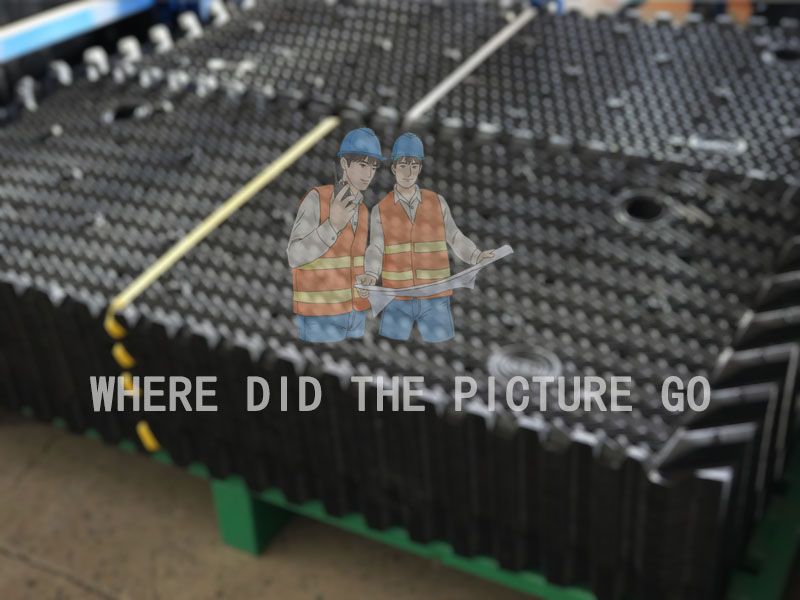
When a cooling tower does not achieve the expected cooling performance, many people first check the fan, motor, or water pump. However, in many real projects, the problem is related to the internal fill system.
The main purpose of cooling tower fill is to create a large contact area between water and air. This contact area allows heat to transfer from water to air through evaporation.
Choosing the right fill is not simply about selecting a product with a suitable size. Engineers need to consider the cooling tower design, water quality, operating temperature, airflow conditions, and maintenance requirements.
In many replacement projects, the reason for poor cooling performance is not that the cooling tower itself is too small, but that the existing cooling tower packing has aged, become blocked, or was not suitable for the working environment.
This article explains the main factors engineers should consider when selecting tower fill for new projects and replacement applications.
Before selecting the right fill, it is important to understand how cooling tower fill media works.
Inside a cooling tower, hot circulating water enters from the top and flows downward through the fill area. At the same time, air moves through the fill and removes heat from the water.
A good cooling tower fill media design should achieve a balance between:
If the fill design does not match the operating conditions, problems such as poor cooling effect, increased pressure drop, and frequent cleaning may occur.
The first step when selecting tower fill is understanding what type of cooling tower you have.
Different cooling tower structures require different fill designs. The two most common types are counter flow cooling towers and cross flow cooling towers.
In a counter flow cooling tower, water flows downward while air moves upward through the fill.
This design requires fill media with good airflow characteristics because water and air move in opposite directions.
Many modern counter flow towers use high efficiency film fill cooling tower designs because they provide a large heat transfer surface within a compact space.
In a cross flow cooling tower, air moves horizontally through the fill while water flows downward.
The fill structure and installation method are different from counter flow systems. Choosing the correct fill configuration helps maintain proper water distribution and airflow balance.
Water quality is one of the most important factors when choosing cooling tower packing.
A fill design that works well in a clean HVAC system may not perform well in an industrial environment with more contaminants.
For applications with good water treatment conditions, high efficiency Film Fill is commonly used.
Film Fill creates a thin water film on the surface of the sheets, increasing contact between air and water.
Typical applications include:
For industrial cooling systems, water may contain more minerals, dust, or suspended particles.
In these situations, engineers often pay more attention to clogging resistance and maintenance requirements when selecting fill.
The best choice depends on actual operating conditions rather than only focusing on cooling efficiency.
Material selection has a direct influence on the service life and performance of cooling fill.
The most common materials used in cooling tower fill manufacturing are PVC and PP.
PVC is one of the most widely used materials for cooling tower fill production.
It provides good forming performance and is suitable for many standard cooling applications.
PVC cooling tower fill is commonly selected for:
PP material is known for better temperature resistance and chemical stability compared with standard PVC materials.
It is often considered for applications where operating conditions are more demanding.
Examples include:
Operating temperature is another important factor that should not be ignored.
Different cooling systems operate under different thermal conditions. A fill material suitable for a normal HVAC system may not be the best choice for a high temperature industrial process.
Before selecting tower fill, engineers should review:
Understanding these details helps avoid selecting a fill product that cannot handle the actual working environment.
Cooling tower fill is available in different sizes, heights, thicknesses, and sheet designs.
The correct design depends on:
A taller fill block does not always mean better performance. The entire cooling tower system needs to be considered.
A well-designed cooling fill should provide good heat transfer while maintaining reasonable airflow resistance.
Although fill is a key heat exchange component, other parts of the cooling tower also influence overall performance.
The cooling tower needs sufficient air movement to achieve effective evaporation.
The Air intake grille helps control incoming air and reduce water splash loss.
If airflow is restricted, even high quality fill may not achieve the expected cooling result.
After heat exchange, cooled water needs to return efficiently to the basin.
The Water Collector helps reduce water droplets leaving the tower with discharged air.
A complete cooling tower solution should consider fill, airflow, and water management together.
Price is an important factor, but it should not be the only consideration.
Low quality fill may have problems such as poor bonding, deformation, and shorter service life, which can increase maintenance costs later.
Different towers have different requirements. A fill design that works well in one project may not be suitable for another.
Cooling towers require regular inspection and cleaning. A good fill design should not only provide cooling performance but also support practical maintenance.
Even high quality fill will eventually need replacement due to operating conditions.
Common replacement signs include:
Replacing old fill at the right time can help restore cooling performance without replacing the complete cooling tower system.
Before purchasing replacement fill, engineers can review the following checklist:
Selecting the right cooling tower fill requires a practical understanding of the entire cooling system. The best choice is not always the most expensive product or the highest efficiency design.
The right solution depends on matching the fill structure, material, and design with actual operating conditions.
Whether you are building a new cooling tower or replacing old cooling tower fill media, careful selection can help improve cooling stability, reduce maintenance problems, and support long-term system operation.
A professional evaluation of water conditions, tower design, and operating requirements is always the best starting point for choosing suitable tower fill.
Leave a comment
All fields marked with an asterisk (*) are required